Nutrigenomics Market Size
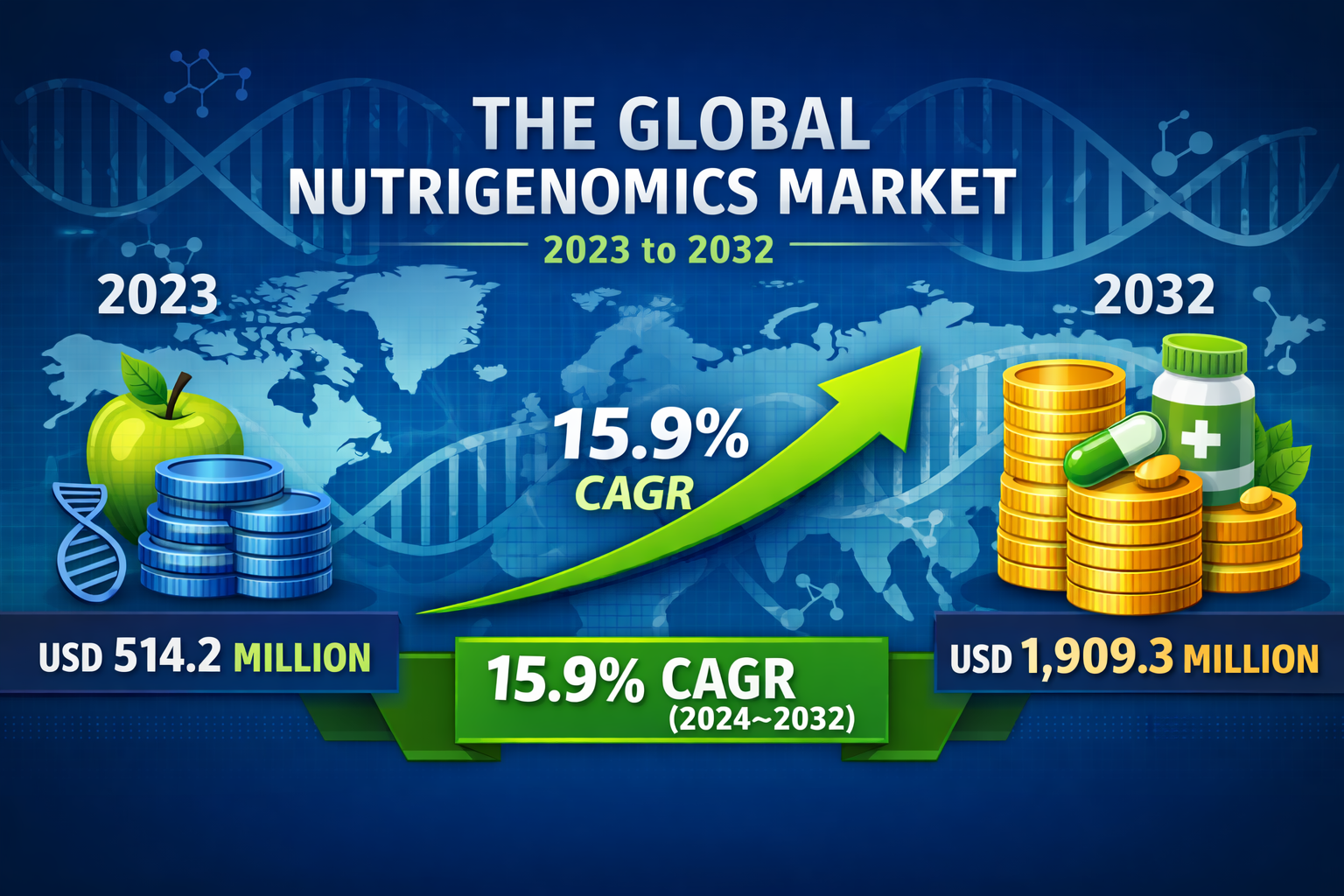
The global nutrigenomics market was valued at approximately USD 514.2 million in 2023 and is forecast to grow to around USD 1,909.3 million by 2032, at a CAGR of 15.9% over the period from 2024 to 2032.
What Is the Nutrigenomics Market?
The nutrigenomics market revolves around the emerging science of nutrigenomics — the study of how foods and nutrients interact with an individual’s genetic makeup and influence health. At its core, nutrigenomics seeks to understand how genetic variations affect nutrient metabolism, gene expression, and long‑term health outcomes, enabling personalized nutrition strategies that are tailored to an individual’s biology.
In practice, this involves advanced genetic testing technologies that analyze a person’s DNA to uncover how their body responds to specific nutrients. These insights are then used to develop individualized diet plans, preventive health strategies, and targeted nutritional products that can reduce the risk of chronic diseases such as obesity, diabetes, and cardiovascular disorders.
Scope & Significance:
Helps move nutrition from one‑size‑fits‑all to precision dietary guidance.
Has applications in healthcare, fitness & wellness, nutraceuticals, and disease prevention.
Integrates genomic science with nutrition, biotechnology, and data analytics to drive personalized health outcomes.
Positions itself at the intersection of preventive healthcare and consumer demand for tailored wellness solutions.
Get a Free Sample: https://www.acumenresearchandconsulting.com/request-sample/3748
Market Trends
The nutrigenomics market is evolving rapidly, propelled by several noteworthy trends:
Personalized Nutrition Takes Center Stage
Consumers are increasingly seeking nutrition regimens that reflect their unique genetic predispositions rather than generic dietary guidelines. This shift toward personalization is a major trend driving market demand.
Technological Advancements
Improvements in genetic sequencing, bioinformatics, and data analytics are making genetic tests more accurate and affordable. These capabilities enable deeper insights into gene-nutrient interactions and support the development of advanced nutrigenomic solutions.
Rise of Direct-to-Consumer Genetic Testing
Direct-to-consumer (DTC) testing services are expanding, allowing individuals to obtain genetic health insights — including nutrigenomic profiles — without needing a healthcare provider intermediary. This trend democratizes access and broadens the target audience for nutrigenomics.
Food & Supplement Innovation
There’s a growing focus on functional foods and nutritional supplements that are designed based on genetic insights, paving the way for tailor-made dietary solutions and nutraceutical offerings.
These trends underscore a broader shift toward preventive and personalized healthcare, where nutrition plays an integral role in health optimization and chronic disease management.
Market Dynamics
Understanding the forces shaping the nutrigenomics market provides insight into its opportunities and challenges.
Key Drivers
Growing demand for personalized nutrition and precision medicine: Consumers want tailored solutions that deliver better health outcomes.
Increased awareness of diet-gene interactions: More people understand the role genetics play in nutrition response.
Technological advancements: Developments in genetic testing methods and bioinformatics fuel growth.
Primary Restraints
High cost of genetic testing: Expense remains a barrier for broader market penetration.
Lack of standardized guidelines: There is no global consensus on how to interpret genetic nutrition data.
Privacy and ethical concerns: Managing and protecting sensitive genetic data is a significant challenge.
Growth Opportunities
Expansion of DTC genetic testing services: Wider availability can increase market adoption.
Integration into preventive healthcare strategies: Nutrigenomics can play a larger role in long-term health management.
Development of tailored foods and nutraceuticals: Personalized products represent a high-growth niche.
Challenges
Ethical, regulatory, and privacy issues around genetic data management.
Consumer education and trust remain foundational hurdles.
Regional Analysis
Different regions show varied market growth influenced by economic, healthcare, and consumer trends.
North America
North America is the dominant market, led by advanced healthcare systems, high consumer awareness of personalized nutrition, and robust investment in genetic research and technologies. The U.S. and Canada benefit from strong incorporation of personalized health services and a well-developed biotech sector.
Asia-Pacific
Asia-Pacific — including countries like China, India, and Japan — is experiencing rapid growth, driven by rising health consciousness, a large population base, increased investment in biotechnology, and expanded consumer demand for personalized health solutions.
Europe, Latin America & Middle East/Africa
While not leading the market, these regions are gradually expanding their nutrigenomics footprint. European investment in healthcare innovation and preventive care supports adoption, while Latin America and Middle East/Africa are emerging markets with strong growth potential tied to rising disposable incomes and health awareness.
Recent Developments
Recent industry movements include:
Growing Strategic Partnerships and Collaborations: Across the genomics and nutrition industries, partnerships are forming to integrate nutrigenomic insights into health-tech platforms and services.
Emergence of Nutrition-Focused Services by Global Leaders: Major nutrition and healthcare companies have launched personalized nutrition services that leverage genetic insights to tailor dietary plans.
These developments show how the market is expanding beyond pure testing to holistic, technology-enabled nutrition solutions, blending wellness, software, and genetic science.
Conclusion
The nutrigenomics market is poised for substantial growth, driven by advances in genetic technologies, shifting consumer preferences toward personalized health, and expanding applications in preventive medicine. With global market estimates reaching nearly USD 1.9 billion by 2032, and accelerated adoption across regions, nutrigenomics is moving from niche science into mainstream healthcare and wellness.
This market’s evolution will likely continue to be shaped by innovation, data integration, strategic industry collaborations, and increasing emphasis on precision nutrition — promising transformative changes in how individuals manage health through diet and genetics.
To Get Detailed Overview, Contact Us: https://www.acumenresearchandconsulting.com/contact-us