Telehealth Kiosk Market Size
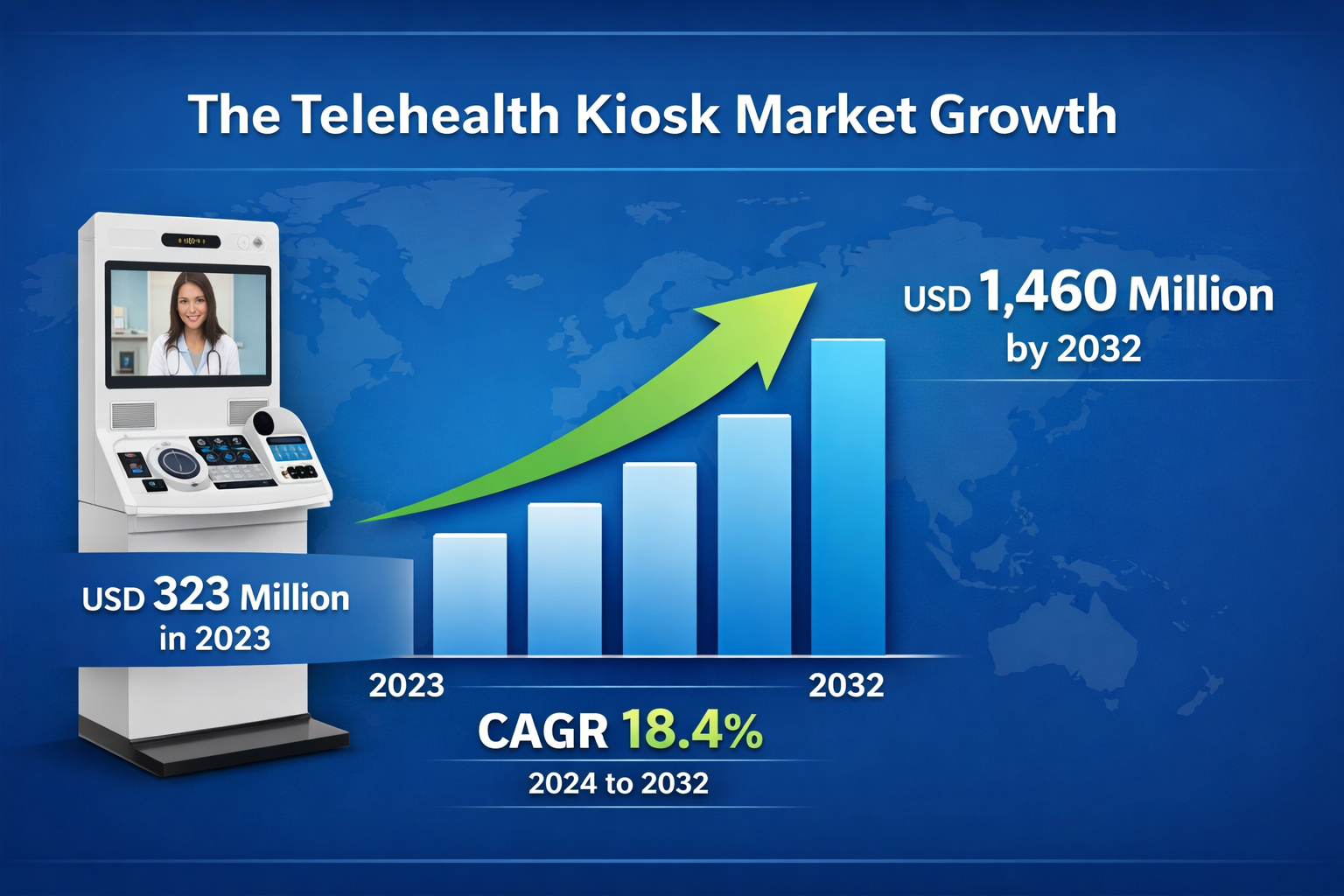
The global telehealth kiosk market value was estimated at USD 323 million in 2023 and is projected to hit USD 1,460 million by 2032, growing at a CAGR of 18.4%.
What Is the Telehealth Kiosk Market?
A telehealth kiosk is a standalone interactive station equipped with medical devices and communication technologies that enable remote healthcare access. These kiosks allow patients to:
Conduct virtual consultations with physicians
Monitor vital signs such as blood pressure or temperature
Receive medical advice, prescriptions, and follow-up care
Access health information and basic diagnostics
Unlike mobile telemedicine apps or in-home devices, telehealth kiosks are typically placed in public or high-footfall locations such as pharmacies, supermarkets, community centers, hospitals, or workplaces to expand healthcare access, especially in underserved or rural regions where traditional care facilities may be scarce.
Market Trends
The telehealth kiosk market is evolving rapidly as both healthcare providers and consumers embrace digital health solutions. Key trends shaping the market include:
Rise of Teleconsultation
Teleconsultation remains the largest application segment, driven by patient demand for remote medical advice and convenience.Technology Advancements
Improved internet connectivity, intuitive interfaces, and miniaturization of medical devices have made kiosks more efficient, user-friendly, and cost-effective to deploy.Pandemic-Driven Adoption
The COVID-19 pandemic significantly accelerated telehealth adoption across healthcare systems, reinforcing the value of remote services and minimizing person-to-person contact.Deployment in Diverse Settings
Beyond hospitals and clinics, kiosks are increasingly installed in retail environments, community hubs, and workplaces, bringing basic healthcare access closer to patients.
These trends reflect a broader shift toward patient-centric, hybrid care models that merge digital and in-person services.
Market Dynamics
Understanding what drives and challenges this market helps reveal its future trajectory:
Drivers:
Increasing demand for accessible healthcare, especially in rural or underserved regions
Technological innovation improving the reliability and functionality of kiosks
Healthcare providers’ focus on patient engagement and cost reduction
Supportive investments and partnerships between healthcare organizations and tech firms
Restraints:
Regulatory challenges related to compliance, privacy, and healthcare policies
Limited reimbursement frameworks for telehealth services in some regions
Opportunities:
Integration with Electronic Health Records (EHRs) to streamline patient data access
Customization for specific healthcare needs, such as chronic disease monitoring or specialized care modules
Challenges:
Ensuring consistent quality, data security, and seamless integration with existing healthcare systems
Regional Analysis
The growth of the telehealth kiosk market varies significantly across regions:
North America:
North America commanded over 51% market share in 2023. This dominance is attributed to advanced healthcare infrastructure, high digital penetration, and significant adoption of telehealth by providers.
Asia-Pacific:
The Asia-Pacific region is projected to grow at one of the fastest CAGRs through 2032. Countries like China, India, Japan, and Australia are expanding investments in digital healthcare infrastructure to improve access in both urban and rural settings.
Europe:
Europe continues to hold a substantial share, with growing adoption across the UK, Germany, and France driven by insurance coverage expansions and digital health policies.
Latin America & Middle East & Africa:
Although smaller in absolute share, these regions present significant future growth opportunities as healthcare access initiatives and telehealth awareness expand.
Across markets, a common theme is the push to bridge health access gaps, especially in underserved communities.
Recent Developments
Notable recent developments in the telehealth kiosk market include:
Public health telehealth kiosks in the U.S. have been deployed in rural communities to expand remote services and increase healthcare access.
Pharmacy and retail kiosks are being integrated into prescription workflows, providing a convenient point of care in commercial settings.
These examples reflect broader trends toward integrating kiosk solutions into everyday healthcare delivery — from rural access to retail pharmacy workflows.
Final Takeaway
The telehealth kiosk market is charting a compelling growth trajectory driven by technological innovation, evolving patient expectations, and a global focus on accessible healthcare. With market value projected to reach USD 1,460 million by 2032 and rapid expansion across regions, telehealth kiosks stand at the forefront of hybrid care delivery models, offering convenience, efficiency, and broader healthcare access for patients everywhere.
To Get Detailed Overview, Contact Us: https://www.acumenresearchandconsulting.com/contact-us