Direct-to-Consumer Genetic Testing Market Size
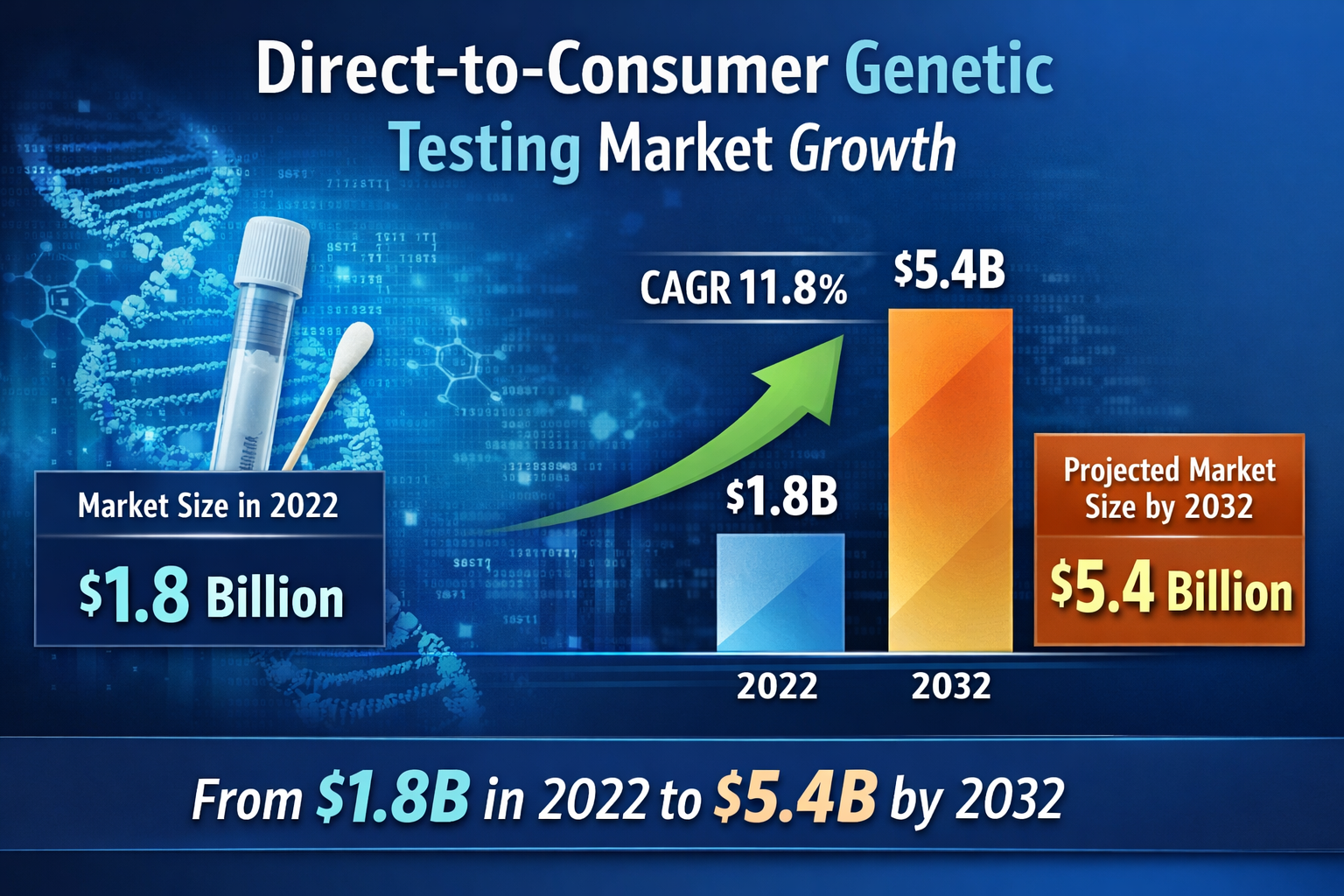
The global direct-to-consumer genetic testing market was valued at USD 1.8 Billion in 2022 and is expected to expand to USD 5.4 Billion by 2032, growing at a CAGR of 11.8% over the forecast period.
What Is the Direct-to-Consumer Genetic Testing Market?
The Direct-to-Consumer Genetic Testing Market represents the ecosystem of products and services that allow individuals to obtain genetic information directly from commercial providers, without the mandatory involvement of healthcare professionals.
These tests typically analyze specific DNA markers and provide users with insights related to:
Ancestral origins and lineage
Genetic predispositions to certain health conditions
Carrier status for inherited disorders
Lifestyle-related traits such as nutrition, fitness, and metabolism
The market includes a variety of test categories, including predictive testing, carrier testing, nutrigenomics, ancestry testing, and relationship testing. These services are powered by technologies such as whole genome sequencing, targeted DNA analysis, and SNP (single nucleotide polymorphism) genotyping.
Scope and Significance
The significance of this market lies in its accessibility and consumer-centric nature. DTC genetic testing has lowered the barriers to genetic analysis by offering affordable, easy-to-use kits that typically require only a saliva sample or cheek swab.
The growing interest in personalized healthcare, preventive wellness strategies, and self-directed health management continues to drive demand for these services globally.
Get a Free Sample: https://www.acumenresearchandconsulting.com/request-sample/3508
Market Trends
Several important trends are shaping the evolution of the direct-to-consumer genetic testing market.
Technological Advancements
One of the most notable trends is the shift from basic ancestry-focused testing to more comprehensive genetic insights. Modern DTC tests increasingly offer information related to disease risk, pharmacogenomics, and lifestyle optimization.
Advancements in whole genome sequencing technologies, combined with declining sequencing costs, are enabling companies to deliver more detailed and accurate genetic analyses.
Changing Consumer Behavior
Consumers are becoming more proactive about their health and wellness. There is a growing preference for personalized insights that can guide decisions related to diet, exercise, and long-term health planning.
Interest is no longer limited to genealogy. Health-related genetic testing is gaining momentum as individuals seek early indicators of potential medical risks.
Expansion of Digital Channels
Online distribution channels are playing a crucial role in market growth. Digital platforms have simplified test ordering, sample submission, and result delivery, making genetic testing more convenient and widely accessible.
The continued expansion of e-commerce and telehealth ecosystems is expected to further accelerate adoption.
Emerging Opportunities
New opportunities are emerging through test customization and niche offerings, such as:
Fitness and performance genetics
Personalized nutrition profiling
Condition-specific genetic panels
Collaborations between genetic testing providers, healthcare organizations, and pharmaceutical companies are also creating pathways for integrated consumer-clinical solutions.
Market Dynamics
The market’s trajectory is influenced by a combination of drivers, restraints, opportunities, and challenges.
Drivers
Key growth drivers include:
Rising consumer awareness of genetic testing
Increasing interest in personalized medicine
Technological advancements in genomics
Greater accessibility and affordability of testing kits
The mainstream acceptance of genetic science in health and lifestyle decisions is significantly contributing to market expansion.
Restraints
Despite strong growth potential, certain factors restrain market development:
Data privacy and security concerns
Limited consumer understanding of complex genetic data
Ethical considerations surrounding genetic information
The sensitive nature of genetic data makes trust and transparency critical factors for industry players.
Opportunities
Opportunities in the market are driven by:
Expanding research in genomics
Development of new testing applications
Increased demand for personalized healthcare
As scientific understanding of genetics deepens, the range of potential consumer-facing applications continues to broaden.
Challenges
The market faces several structural challenges:
Regulatory inconsistencies across regions
Ensuring scientific validity and test accuracy
Ethical management of consumer genetic data
Balancing innovation with regulatory compliance and consumer protection remains a central challenge for market participants.
Regional Analysis
The performance of the direct-to-consumer genetic testing market varies across regions.
North America
North America holds the largest market share, driven by high consumer awareness, advanced healthcare infrastructure, and strong digital adoption. The region’s mature biotechnology ecosystem and early acceptance of genetic testing technologies support its leadership position.
Europe
Europe is expected to experience robust growth, supported by rising consumer awareness, expanding personalized healthcare initiatives, and evolving regulatory frameworks. Increased focus on preventive healthcare is also contributing to market expansion.
Asia-Pacific
The Asia-Pacific region is witnessing rapid growth due to:
Increasing healthcare awareness
Rising disposable incomes
Expanding access to digital health services
Growing interest in ancestry testing and lifestyle genetics is fueling demand in emerging economies.
Other Regions
Latin America and the Middle East & Africa are experiencing steady growth, although adoption levels remain comparatively lower. Improving healthcare access and digital infrastructure are expected to support gradual market expansion.
Recent Developments
The direct-to-consumer genetic testing industry continues to evolve through strategic developments and industry shifts.
Industry Consolidation and Strategic Moves
The broader genetic testing landscape has witnessed significant corporate activity, including acquisitions and restructuring efforts that are reshaping competitive dynamics. Such developments highlight the increasing strategic value of genetic data and genomic technologies.
Heightened Focus on Data Privacy
Regulators and policymakers worldwide are placing greater emphasis on data protection and ethical governance of genetic information. Strengthened privacy regulations are influencing how companies collect, store, and utilize consumer genetic data.
Expansion of Testing Capabilities
Market participants are continuously expanding their test portfolios to include more advanced health-related insights, lifestyle analytics, and personalized recommendations. Innovation remains a core competitive differentiator.
Conclusion
The Direct-to-Consumer Genetic Testing Market is undergoing rapid expansion and transformation. What began as a niche service centered on ancestry analysis has evolved into a multifaceted industry offering health, wellness, and lifestyle insights.
With ongoing technological advancements, growing consumer demand for personalization, and expanding applications of genomic science, the market is positioned for sustained long-term growth. However, issues surrounding data privacy, regulatory compliance, and ethical considerations will remain central to the industry’s future development.
To Get Detailed Overview, Contact Us: https://www.acumenresearchandconsulting.com/contact-us