United States Naloxone Market Size
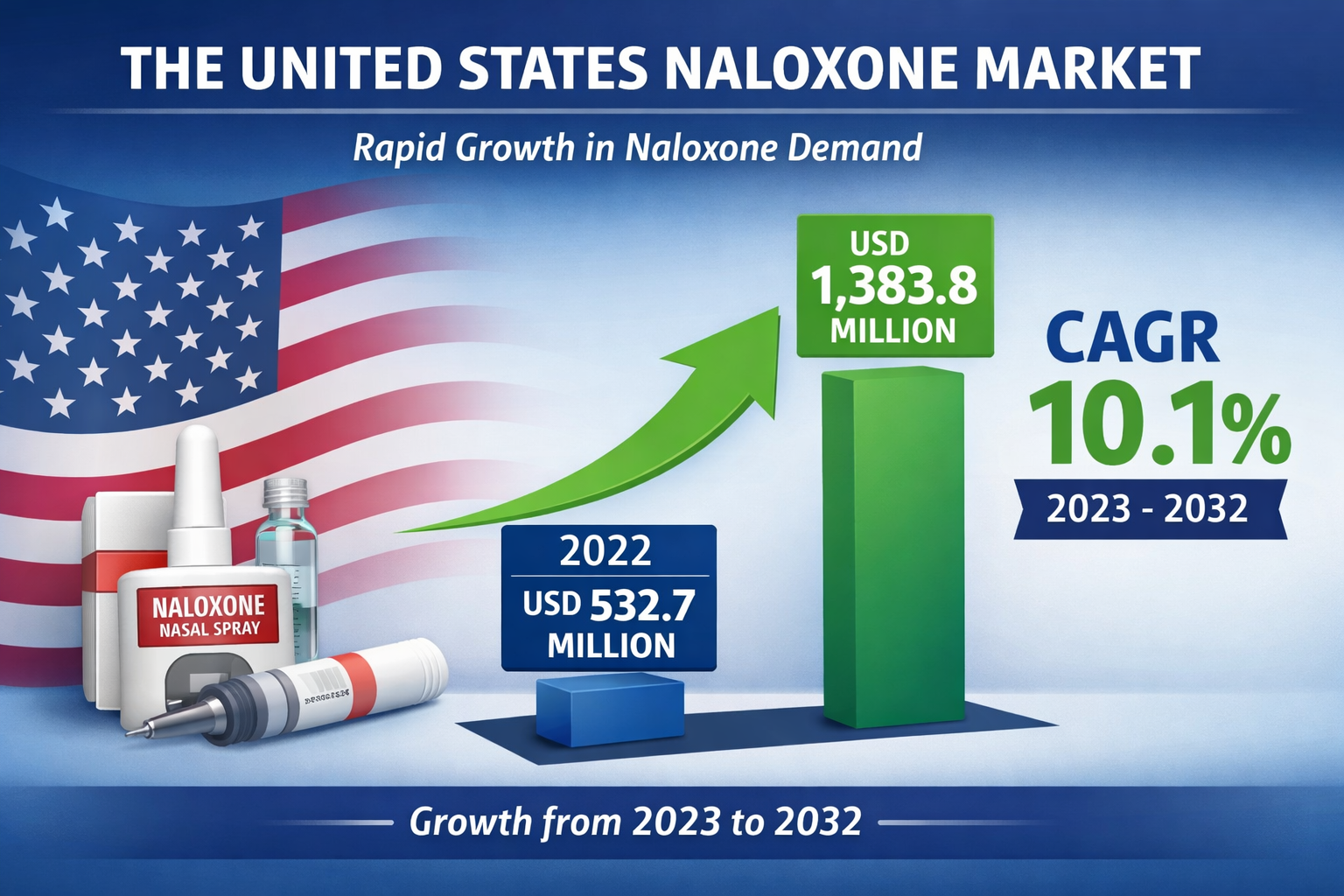
The United States Naloxone Market was valued at USD 532.7 Million in 2022 and is forecasted to reach USD 1,383.8 Million by 2032, growing at a CAGR of 10.1% between 2023 and 2032.
What Is the United States Naloxone Market?
The United States Naloxone Market refers to the commercial ecosystem surrounding the production, distribution, and administration of naloxone products across the country. Its scope includes various formulations, such as injectable solutions, nasal sprays, and auto‑injectors, multiple delivery routes including intranasal, intramuscular/subcutaneous, and intravenous, and distribution channels including hospital pharmacies, clinic pharmacies, retail pharmacies, and community outreach programs.
Naloxone’s significance stems from its role in rapidly reversing opioid overdoses, which are among the leading causes of preventable deaths in the U.S., particularly due to potent synthetic opioids like fentanyl. The market not only represents pharmaceutical sales but also reflects public health strategies, regulatory reforms, and community efforts to make lifesaving interventions more accessible.
Market Trends
Several key trends are shaping the trajectory of the United States Naloxone Market:
Expansion of Product Offerings
Manufacturers have diversified naloxone formulations to include intranasal sprays, injectables, and auto‑injector devices—each tailored for different end-users ranging from trained healthcare professionals to family members and first responders.
Increased Public Accessibility
Regulatory changes and standing orders in many states now allow naloxone to be dispensed without individual prescriptions in pharmacies, significantly enhancing public access. Retail pharmacies have become crucial distribution points alongside traditional clinical supply channels.
Community and Grassroots Involvement
Educational outreach and community-based naloxone distribution programs have grown in importance. These initiatives not only provide naloxone kits but also train community members in its effective use—a trend that supports decentralized overdose response capabilities.
Get a Free Sample: https://www.acumenresearchandconsulting.com/request-sample/3399
Market Dynamics
Drivers
Rising opioid overdose rates have increased demand for emergency interventions like naloxone.
State and federal legislative changes have expanded access and reduced barriers to naloxone distribution.
Public health campaigns and training initiatives have helped demystify naloxone use and encourage adoption beyond emergency responders.
Restraints
Some naloxone products, especially branded versions, remain costly, limiting accessibility for certain populations.
The stigma attached to opioid use disorders can deter individuals from seeking or using naloxone.
Differences in state policies and resource allocation can lead to unequal naloxone access across regions.
Opportunities
Advances in delivery systems and formulations tailored for non-professional use present new market opportunities.
Partnerships between governments, healthcare systems, and community organizations can strengthen widespread naloxone access and education.
Embedding naloxone programs into broader public health and addiction treatment initiatives can expand its impact.
Regional Analysis
While this report focuses specifically on the U.S. market, some geographical performance insights can be drawn:
Across the United States, naloxone demand is driven by both high-risk urban areas and rural communities affected by the opioid crisis.
Larger metropolitan regions with robust healthcare infrastructure may have better naloxone access and training resources through hospitals and pharmacies. Conversely, community programs are critical in underserved regions to close access gaps.
Because naloxone access is strongly tied to state policies and the presence of harm-reduction initiatives, regional nuances in legislative environments and public health funding can significantly influence market performance.
Recent Developments Impacting the Market
Over-the-counter approvals of naloxone nasal sprays have expanded availability beyond pharmacies.
Some retail chains now incorporate digital training for naloxone administration to enhance user confidence before purchase.
Collaborations between naloxone manufacturers and local health organizations have emerged to distribute free kits in high-risk areas.
Such developments signal ongoing transformation of the market toward broader accessibility, consumer engagement, and integration with public health infrastructure.
Conclusion
The United States Naloxone Market stands at the intersection of healthcare urgency and public health response. With a projected growth trajectory from USD 532.7 million in 2022 to roughly USD 1,383.8 million by 2032, a steady compound annual growth rate reflects sustained demand amid the opioid crisis.
Whether through regulatory evolution, community outreach, or innovation in naloxone delivery, the market continues to adapt—offering vital tools and strategies to reduce opioid-related deaths and foster safer, more resilient communities across the United States.
To Get Detailed Overview, Contact Us: https://www.acumenresearchandconsulting.com/contact-us