Tendon Repair Market Size
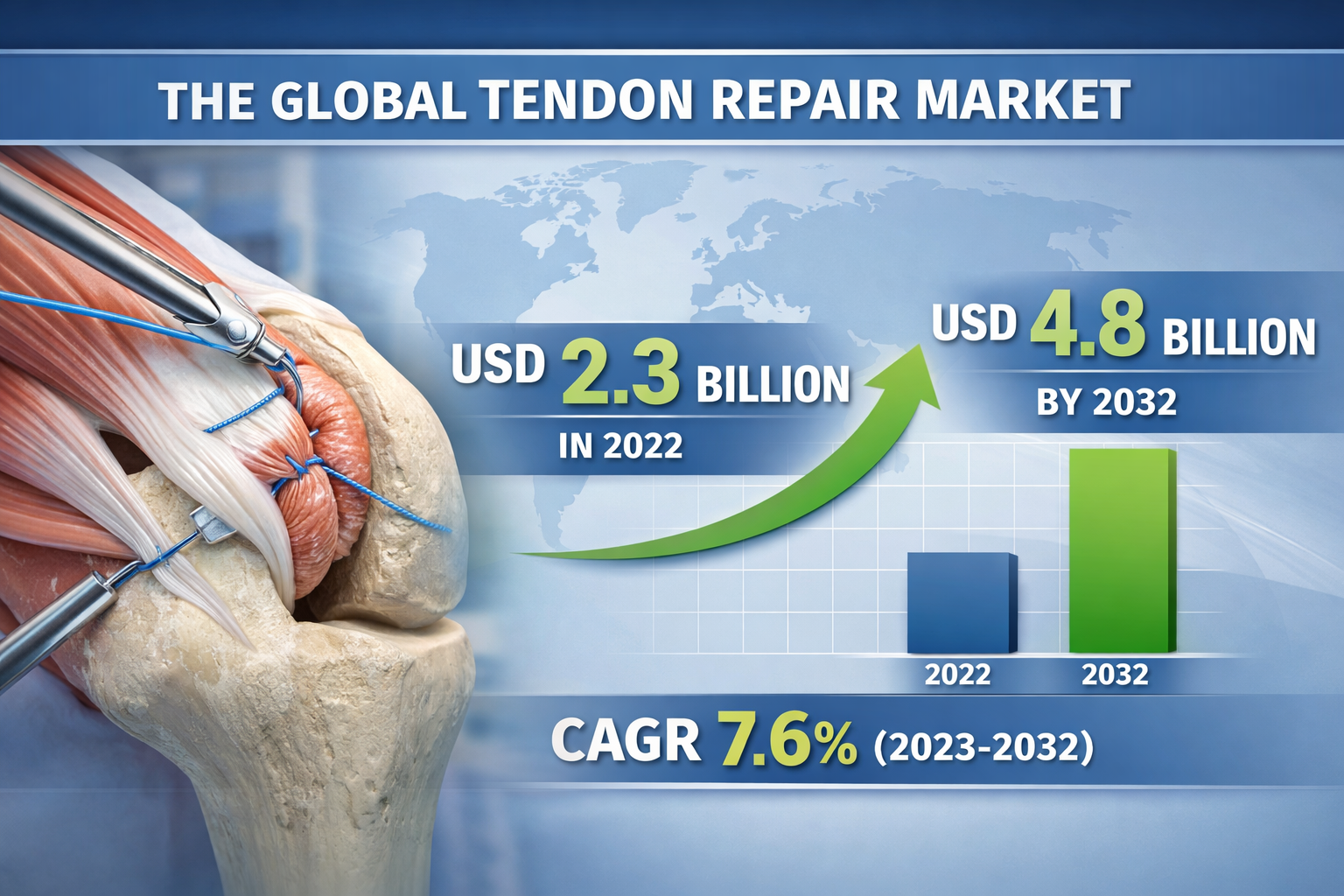
The global tendon repair market size was valued at USD 2.3 billion in 2022 and is expected to reach USD 4.8 billion by 2032, with a robust CAGR of approximately 7.6 % over the forecast period.
What Is the Tendon Repair Market?
The Tendon Repair Market refers to the collection of products, technologies, and procedures used to treat damaged or torn tendons. Tendon injuries are caused by trauma, overuse, degenerative disorders, and age‑related wear, often affecting active individuals and elderly populations alike. Tendon repair procedures involve surgical reattachment of torn tendon ends using devices such as suture anchors, grafts, scaffolds, and implants that enable healing and functional restoration.
This market encompasses medical devices, biologics, and regenerative technologies designed to enhance surgical outcomes. The increasing number of sports‑related injuries and the rising prevalence of musculoskeletal conditions have made these treatments essential in modern orthopedic care. The market’s scope includes hospitals, ambulatory surgical centers, and orthopedic clinics utilizing both open and minimally invasive repairs.
Market Trends
The Tendon Repair Market is undergoing significant transformation, driven by innovation and emerging clinical needs.
Technological Advancements
Minimally Invasive Techniques: Most tendon repair surgeries are shifting towards arthroscopic and percutaneous approaches, reducing recovery time and improving patient outcomes.
Regenerative Medicine: Surgeons are integrating biologic therapies such as platelet‑rich plasma (PRP), stem cells, and tissue‑engineered grafts to enhance tendon healing biologically alongside mechanical repair.
Advanced Biomaterials: Novel scaffolds and graft materials that mimic the mechanical properties of natural tendons are gaining traction, strengthening repair and reducing re‑injury risk.
Digital Health Integration: Wearables, remote monitoring tools, and telemedicine platforms are improving postoperative rehabilitation adherence and clinical follow‑up.
Consumer Behavior & Emerging Opportunities
Patients increasingly prefer treatment options with faster recovery and reduced complications, driving the adoption of biologics and hybrid repair systems that combine synthetic and natural materials. Additionally, rising interest in mobile rehabilitation apps and personalized therapy programs supports long‑term functional recovery.
Get a Free Sample: https://www.acumenresearchandconsulting.com/request-sample/3349
Market Dynamics
The Tendon Repair Market is shaped by several key forces:
Drivers
Sports‑Related Injuries & Active Lifestyles: Increased participation in sports activities has led to higher incidence of tendon injuries, particularly in shoulders and lower limbs.
Aging Population: Tendon degeneration and susceptibility to tears rise with age, expanding the potential patient base for repair procedures.
Medical Innovation: Continued development of biologic enhancements, better fixation devices, and improved surgical instruments stimulates market growth.
Restraints
Cost Barriers & Accessibility: Advanced devices and biologics can be expensive, limiting their adoption in cost‑sensitive markets.
Regulatory Hurdles: New biologics and hybrid technologies often require long clinical validation, which can delay market entry and increase development risk.
Opportunities
Regenerative Solutions Adoption: There is growing clinical interest in therapies that promote natural tendon regeneration and reduce revision rates.
Untapped Markets: Asia‑Pacific and other developing regions present opportunities for increased device adoption as orthopedic healthcare expands.
Challenges
Repair Durability: High mechanical loads and complex tears impose design challenges for devices, requiring long‑term performance data to gain surgeon trust.
Regional Analysis
The Tendon Repair Market exhibits diverse regional performance influenced by healthcare infrastructure, injury prevalence, and economic conditions.
North America
North America remains the dominant region, accounting for approximately 44 % of market share. Well‑established healthcare systems, widespread adoption of advanced surgical technologies, and high participation in sports drive market leadership. The U.S. in particular leads in both surgical volumes and innovation adoption.
Asia‑Pacific
The Asia‑Pacific region is projected to witness the fastest growth due to rising disposable incomes, improving healthcare access, and a large patient pool with both sports injuries and age‑related tendon conditions. Countries such as China, India, Japan, and South Korea are investing in orthopedic care facilities and specialty surgery centers, creating strong demand for tendon repair solutions.
Europe & Other Regions
Europe is a mature market with ample orthopedic expertise and high procedure rates for rotator cuff and Achilles tendon repairs. Latin America and the Middle East & Africa are emerging regions with growing demand as healthcare infrastructure improves and awareness of advanced repair techniques increases.
Recent Developments
The Tendon Repair Market has seen several noteworthy developments that reflect competitive dynamics and innovation:
Device Innovation: Leading medical device companies are launching next‑generation fixation devices, biodegradable implants, and hybrid biologic systems to improve healing outcomes.
Strategic Industry Moves: Major players continue to expand their portfolios through acquisitions, collaborations, and product upgrades to remain competitive.
Regulatory Approvals: Regulatory approvals for advanced surgical anchors and biologically enhanced scaffolds have recently expanded the treatment options available to clinicians.
These developments not only broaden the range of clinical choices but also strengthen the market’s growth trajectory by continuously enhancing repair effectiveness and patient satisfaction.
Conclusion
The Tendon Repair Market is positioned for sustained growth, driven by robust clinical demand, technological innovation, and expanding regional opportunities. With advances in minimally invasive surgery, biologics, and digital rehabilitation, tendon repair solutions are becoming more effective and patient‑centered. As healthcare systems worldwide evolve, this market continues to present strong prospects for manufacturers, clinicians, and patients seeking improved outcomes in tendon injury therapy.
To Get Detailed Overview, Contact Us: https://www.acumenresearchandconsulting.com/contact-us