IV Bags Material Market Size
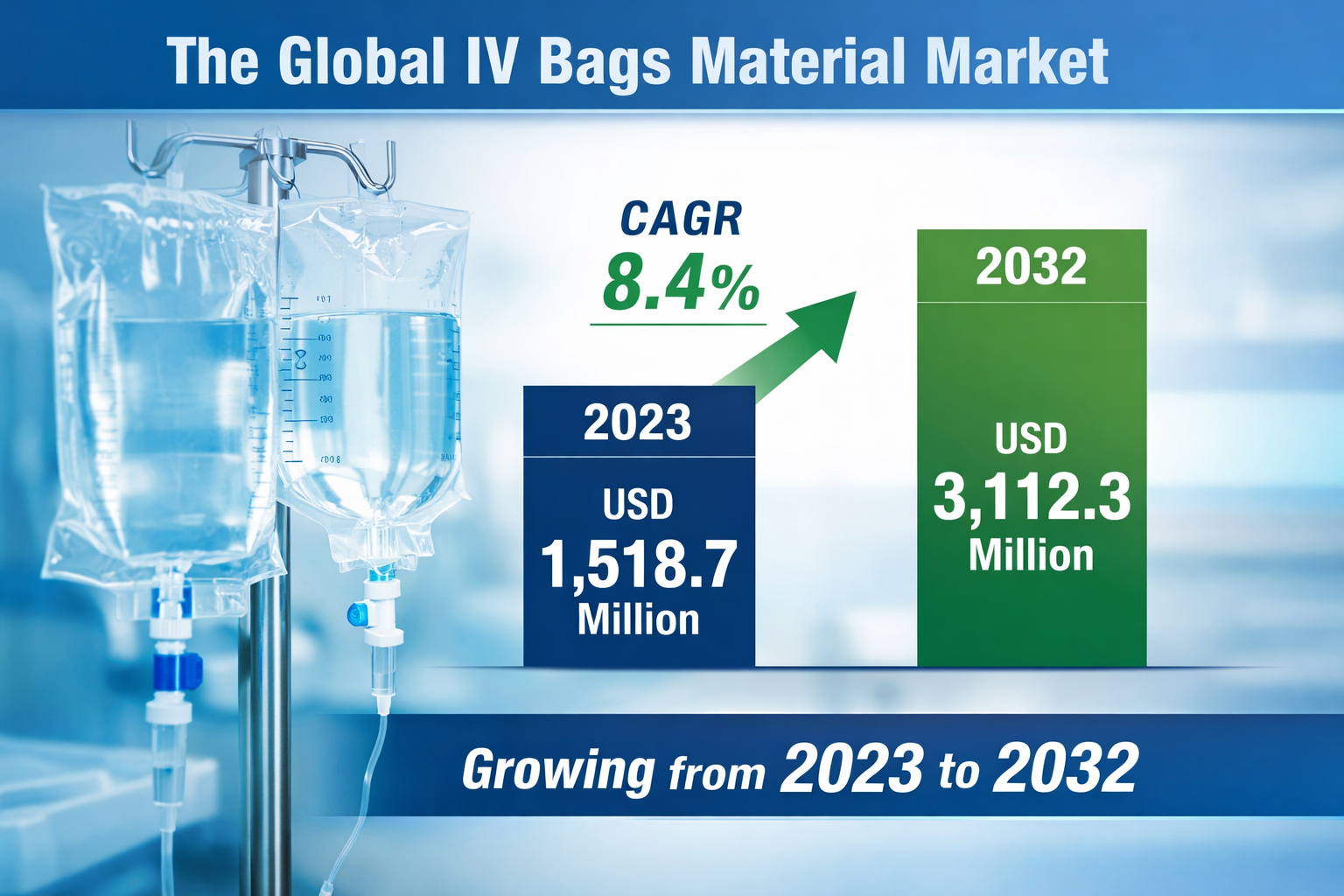
The global IV bags material market was valued at approximately USD 1,518.7 million in 2023 and is forecast to grow to around USD 3,112.3 million by 2032, at a CAGR of 8.4% over the period from 2024 to 2032.
Key takeaways: IV Bags Material Market
- The global IV bags material market was valued at approximately USD 1,518.7 million in 2023 and is forecast to grow to around USD 3,112.3 million by 2032, at a CAGR of 8.4% over the period from 2024 to 2032.
- The IV Bags Material Market encompasses the global industry involved in the development, production, and supply of materials used in intravenous (IV) bags.
- Key growth drivers: Increasing demand for intravenous therapies across healthcare settings, Growing emphasis on patient safety and regulatory compliance, Rising healthcare investments and expansion of medical infrastructure globally, Adoption of advanced materials offering better chemical resistance and performance.
What is the IV Bags Material Market?
The IV Bags Material Market encompasses the global industry involved in the development, production, and supply of materials used in intravenous (IV) bags. IV bags are critical medical devices designed to deliver fluids, medications, nutrients, and blood products directly into a patient’s bloodstream. The materials used in these bags must meet strict medical standards for sterility, flexibility, durability, chemical compatibility, and patient safety.
Commonly used materials include polyvinyl chloride (PVC), polyolefins (such as polyethylene and polypropylene), and ethylene vinyl acetate (EVA). PVC has traditionally dominated the market due to its transparency and flexibility; however, growing safety and environmental concerns related to plasticizers have accelerated the adoption of non-PVC alternatives.
The market’s scope covers various material types, bag configurations (single-chamber and multi-chamber), sizes, and healthcare settings such as hospitals, clinics, and ambulatory surgical centers. The IV bags material market plays a vital role in healthcare delivery, supported by the increasing need for intravenous therapies, surgical procedures, emergency care, and chronic disease management worldwide.
Get a Free Sample: https://www.acumenresearchandconsulting.com/request-sample/3765
Market Trends
Shift Toward Non-PVC Materials
One of the most prominent trends in the IV bags material market is the transition away from PVC-based materials. Concerns regarding chemical leaching and environmental impact have encouraged manufacturers and healthcare providers to adopt safer alternatives such as polyolefin and EVA. These materials offer improved drug compatibility and reduce health risks associated with plasticizers.
Focus on Biocompatibility and Sustainability
Healthcare systems are increasingly prioritizing biocompatible and eco-friendly materials. Manufacturers are investing in recyclable and non-toxic polymers that comply with environmental regulations while maintaining high safety and performance standards.
Rising Use of Intravenous Therapies
The growing prevalence of chronic diseases, rising hospital admissions, and increasing surgical procedures have led to higher demand for IV therapies. This trend directly drives the need for reliable and high-quality IV bag materials.
Advancements in Manufacturing Technologies
Technological advancements have improved material strength, barrier protection, and shelf life. Modern manufacturing techniques allow IV bags to safely store complex medications and biologics, ensuring enhanced patient safety and treatment efficiency.
Market Dynamics
Key Drivers
Increasing demand for intravenous therapies across healthcare settings
Growing emphasis on patient safety and regulatory compliance
Rising healthcare investments and expansion of medical infrastructure globally
Adoption of advanced materials offering better chemical resistance and performance
Market Restraints
Environmental and regulatory concerns associated with PVC materials
Volatility in raw material availability and pricing
High compliance costs related to stringent medical regulations
Opportunities
Rising demand for sustainable and recyclable IV bag materials
Expansion of healthcare infrastructure in emerging economies
Innovation in advanced polymer blends and non-PVC material solutions
Challenges
Balancing cost efficiency with strict safety and quality standards
Navigating complex regulatory frameworks across different regions
Ensuring consistent supply chains for high-grade medical polymers
Regional Analysis
North America
North America represents a leading market for IV bags materials due to its advanced healthcare infrastructure, high healthcare expenditure, and strong regulatory oversight. The region has shown a significant shift toward non-PVC materials driven by patient safety and environmental considerations.
Asia-Pacific
Asia-Pacific is expected to witness the fastest growth in the IV bags material market. Rapid population growth, increasing healthcare investments, rising awareness of advanced medical treatments, and improving hospital infrastructure in countries such as China, India, and Japan are key growth factors.
Europe
Europe continues to experience steady growth supported by strict regulatory standards and increasing adoption of environmentally sustainable medical materials. The region’s focus on eliminating hazardous substances in medical devices further supports demand for non-PVC alternatives.
Latin America and Middle East & Africa
These regions are gradually gaining traction due to improving healthcare infrastructure, rising medical tourism, and increased access to intravenous therapies. Growth is supported by government initiatives aimed at strengthening healthcare delivery systems.
Recent Developments
Recent developments in the IV bags material market highlight a strong focus on safety, innovation, and sustainability. Manufacturers are increasingly investing in non-PVC materials to comply with evolving regulatory standards and meet growing healthcare demands. Advancements in material science have enhanced IV bag performance, durability, and compatibility with sensitive drugs.
Additionally, rising investments in sustainable healthcare solutions and improvements in production technologies continue to reshape the competitive landscape. Regulatory updates emphasizing patient safety and environmental responsibility have further accelerated innovation and material substitution across the market.
Conclusion
The IV Bags Material Market is positioned for strong growth, driven by increasing global demand for intravenous therapies, rising healthcare expenditures, and a shift toward safer and more sustainable materials. The transition from PVC to non-PVC alternatives, combined with technological advancements and expanding healthcare infrastructure in emerging economies, is expected to shape the market’s future. Companies that focus on innovation, regulatory compliance, and sustainability are likely to gain a competitive advantage in this evolving healthcare segment.
To Get Detailed Overview, Contact Us: https://www.acumenresearchandconsulting.com/contact-us
Frequently asked questions about IV Bags Material Market
What is the size of the IV Bags Material Market?
The global IV bags material market was valued at approximately USD 1,518.7 million in 2023 and is forecast to grow to around USD 3,112.3 million by 2032, at a CAGR of 8.4% over the period from 2024 to 2032.
What is the IV Bags Material Market?
The IV Bags Material Market encompasses the global industry involved in the development, production, and supply of materials used in intravenous (IV) bags. IV bags are critical medical devices designed to deliver fluids, medications, nutrients, and blood products directly into a patient’s bloodstream.
What are the key drivers of the IV Bags Material Market?
Key drivers include Increasing demand for intravenous therapies across healthcare settings, Growing emphasis on patient safety and regulatory compliance, Rising healthcare investments and expansion of medical infrastructure globally, Adoption of advanced materials offering better chemical resistance and performance.
Explore more Industry Insights coverage from Med Pharma News.