Table of Contents
ToggleWhat is the Reprocessed Medical Devices Market?
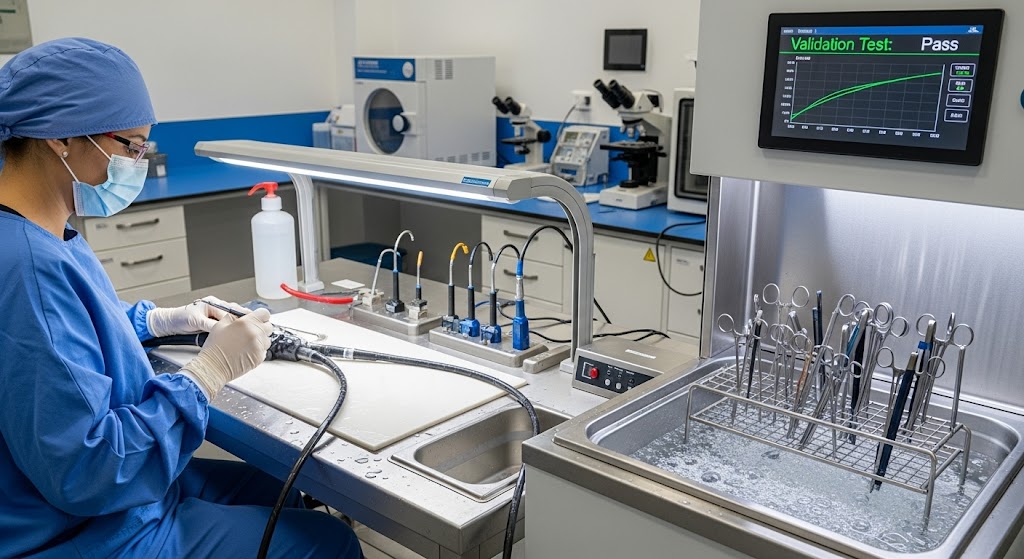
The Reprocessed Medical Devices Market refers to the global industry focused on the collection, cleaning, sterilization, testing, and reuse of medical devices that were originally labeled for single use. These devices—such as catheters, surgical instruments, and endoscopic tools—are reprocessed under strict regulatory guidelines to ensure safety and effectiveness comparable to new devices.
This market has gained significant importance due to its ability to balance cost-efficiency, sustainability, and patient safety. Healthcare providers increasingly adopt reprocessed medical devices to reduce procurement costs while minimizing medical waste. According to industry analysis, the market was valued at USD 2.4 billion in 2022 and is projected to reach USD 12.8 billion by 2032, growing at a CAGR of 18.4%.
The scope of the Reprocessed Medical Devices Market spans hospitals, ambulatory surgical centers, and clinics, with applications across cardiovascular, laparoscopic, orthopedic, and general surgical devices.
Market Trends
The Reprocessed Medical Devices Market is evolving rapidly, driven by technological innovation and changing healthcare priorities.
1. Advancements in Reprocessing Technologies
Continuous improvements in sterilization, cleaning, and decontamination processes are enhancing the safety and reliability of reprocessed devices. Automation and data-driven quality assurance systems are also being integrated into reprocessing workflows.
2. Rising Focus on Sustainability
Healthcare systems are increasingly adopting circular economy practices. Reprocessing reduces landfill waste and carbon emissions associated with manufacturing new devices, aligning with global sustainability goals.
3. Growing Acceptance Among Healthcare Providers
Initially met with skepticism, reprocessed devices are now gaining wider acceptance due to stringent regulatory compliance and proven clinical performance. Transparent communication and quality validation are strengthening trust among clinicians.
4. Expansion of Third-Party Reprocessing
Third-party reprocessors dominate the market, accounting for a significant share, as they provide cost-effective and specialized services compared to in-house reprocessing.
5. Increasing Use in Minimally Invasive Procedures
The rise in minimally invasive surgeries has increased demand for high-cost disposable devices, making reprocessing an attractive option for healthcare facilities.
Market Dynamics
Drivers
Cost Reduction Pressure: Hospitals aim to lower operational expenses without compromising care quality.
Medical Waste Reduction: Increasing environmental concerns are pushing adoption of reusable solutions.
Rising Surgical Procedures: Growing volume of surgeries globally boosts demand for reprocessed devices.
Regulatory Support: Approval from regulatory bodies enhances confidence in reprocessed products.
Restraints
Stringent Regulatory Requirements: Compliance with safety and sterilization standards can be complex.
Perception Challenges: Some healthcare professionals remain cautious about device reliability.
Limited Device Eligibility: Not all single-use devices can be safely reprocessed.
Opportunities
Emerging Markets Growth: Expanding healthcare infrastructure in Asia-Pacific and Latin America offers significant opportunities.
Technological Innovation: Advanced material science and AI-driven quality control systems can improve efficiency.
Partnership Models: Collaborations between hospitals and third-party reprocessors are increasing.
Challenges
Quality Assurance and Traceability: Maintaining consistent safety standards is critical.
Regulatory Variability: Differences in regional regulations can limit market expansion.
Operational Complexity: Reprocessing requires specialized infrastructure and expertise.
Regional Analysis
North America
North America dominates the Reprocessed Medical Devices Market, driven by strong regulatory frameworks, high healthcare spending, and widespread adoption of reprocessing programs.
Europe
Europe is the second-largest market, supported by strict environmental policies and growing emphasis on sustainable healthcare practices.
Asia-Pacific
Asia-Pacific is the fastest-growing region. Rapid healthcare infrastructure development, increasing surgical procedures, and cost-conscious healthcare systems are key growth drivers.
Latin America and Middle East & Africa
These regions are witnessing gradual growth due to improving healthcare access and increasing awareness about cost-effective medical solutions.
Recent Developments
Technological Advancements: Companies are investing in automated reprocessing systems and advanced sterilization technologies to enhance efficiency and safety.
Strategic Collaborations: Partnerships between hospitals and third-party reprocessing firms are expanding to optimize cost savings and operational efficiency.
Regulatory Enhancements: Governments and regulatory bodies are strengthening guidelines to ensure patient safety and build trust in reprocessed devices.
Sustainability Initiatives: Healthcare providers are increasingly integrating reprocessing into their sustainability strategies to reduce environmental impact.
Conclusion
The Reprocessed Medical Devices Market is poised for robust growth, driven by the dual need for cost efficiency and environmental sustainability. With technological advancements, increasing acceptance, and strong regulatory support, the market is transforming modern healthcare delivery.
As healthcare systems worldwide face rising cost pressures and environmental challenges, reprocessed medical devices offer a practical and scalable solution—positioning this market as a critical component of the future healthcare ecosystem.021021
To Get Detailed Overview, Contact Us: https://www.acumenresearchandconsulting.com/contact-us