Clavulanic Acid Market Size
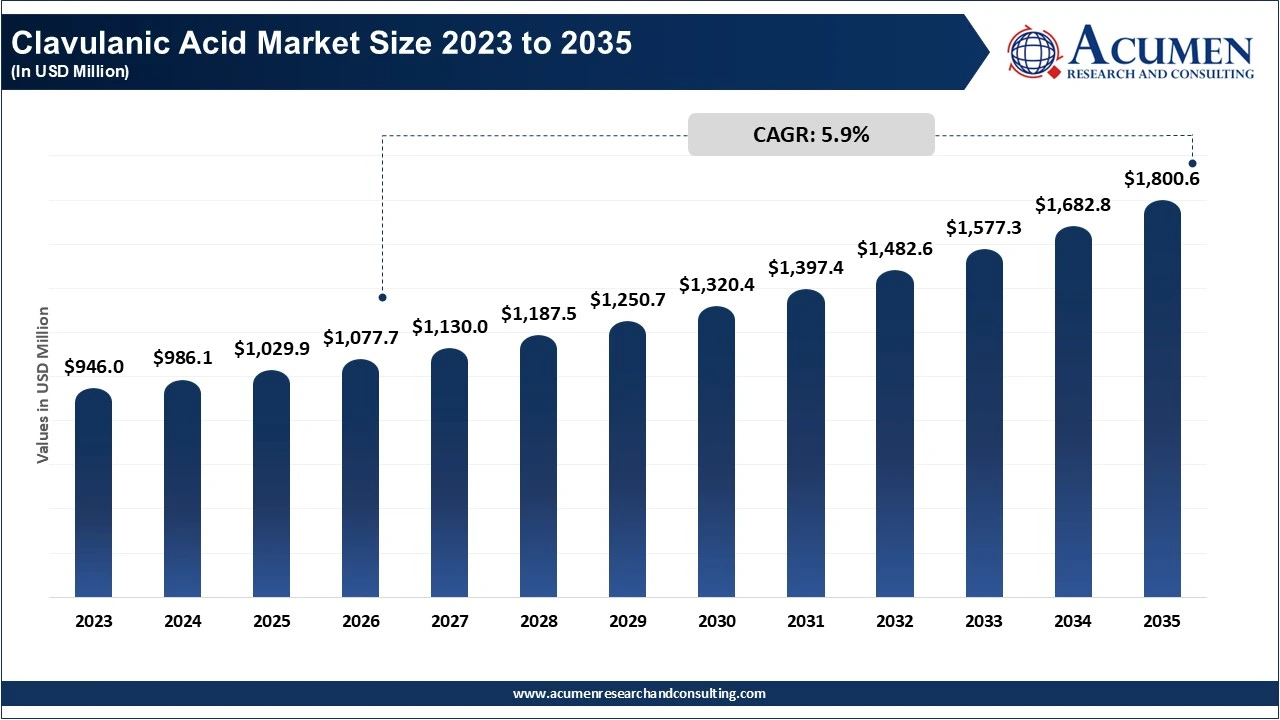
The global clavulanic acid market size was worth USD 1,029.9 million in 2025 and is anticipated to expand to around USD 1,800.6 million by 2035, registering a compound annual growth rate (CAGR) of 5.9% from 2026 to 2035.
Market Trends
Rising Demand for Combination Antibiotic Therapies
One of the most significant trends is the growing use of clavulanic acid in combination with antibiotics, especially with amoxicillin, to counteract bacterial resistance. This combination approach has become a preferred clinical strategy for treating resistant bacterial infections.
Expansion of Healthcare Infrastructure
Emerging markets are witnessing massive investment in healthcare systems, including clinics, hospitals, and diagnostic facilities. This expansion is creating demand for advanced antibiotic treatments that often include clavulanic acid.
Powder Form Dominance
The powder segment holds a commanding market share due to its stability, ease of handling, and suitability for various pharmaceutical formulations.
Increasing Veterinary Applications
Clavulanic acid is seeing expanded use in veterinary medicine, driven by rising livestock farming and pet healthcare needs. This trend reflects broader concerns around zoonotic infections and antimicrobial resistance in animals.
Market Dynamics
Key Growth Drivers
Antibiotic resistance: As bacterial pathogens become resistant to traditional antibiotics, there is a growing reliance on beta‑lactamase inhibitors like clavulanic acid to preserve therapeutic efficacy.
Healthcare infrastructure growth: Increased access to modern healthcare in developing economies boosts demand for effective antibiotic solutions.
Market Restraints
Stringent regulatory frameworks: Regulatory agencies require rigorous safety and clinical data for new formulations containing clavulanic acid, slowing product introductions.
High R&D and production costs: Manufacturing high‑purity clavulanic acid and advancing related research remains capital‑intensive and technologically demanding.
Market Opportunities
Increased R&D investments: Pharmaceutical firms are developing next‑generation antibiotic combinations that incorporate clavulanic acid, especially for resistant infections.
Veterinary sector growth: Rising animal health awareness and farming needs create new pipelines for clavulanic acid‑based veterinary treatments.
Challenges
Supply chain vulnerabilities and competition from alternative therapeutic approaches may impact consistent supply and pricing dynamics.
Regional Analysis
The global clavulanic acid market demonstrates diverse performance across different regions:
North America
North America holds the largest market share, supported by advanced healthcare systems, high awareness of antibiotic resistance issues, and substantial investment in pharmaceutical research. This region recorded the highest revenue in 2025.
Europe
Europe follows closely behind, where regulatory emphasis on antibiotic combination therapies and broad healthcare coverage support market growth.
Asia‑Pacific
Asia‑Pacific is the fastest‑growing market, with a projected CAGR of around 6.9% through 2035. Increased healthcare spending, rising incidence of infections, and major pharmaceutical investments, especially in China and India, are key contributors.
Latin America & MEA
These regions currently contribute smaller shares but are gradually expanding as healthcare access improves and antibiotic demand rises.
Recent Developments
Key industry developments include:
Industry Focus
Key pharmaceutical players such as GlaxoSmithKline plc, Merck & Co., Pfizer Inc., Sanofi, Novartis, Bayer, Abbott, Roche, AstraZeneca, and Johnson & Johnson are central to advancing the market.
Research and Development
Ongoing R&D aims to improve antibiotic efficacy, develop new combinations, and optimize production technologies for clavulanic acid to address antimicrobial resistance more effectively.
Conclusion
The clavulanic acid market stands at the intersection of urgent public health need and pharmaceutical innovation. With antibiotic resistance rising globally, this beta‑lactamase inhibitor remains essential in enhancing antibiotic efficiency, shaping market growth across clinical and veterinary applications. Continued expansion of healthcare infrastructure, growing R&D investments, and regional market developments — especially in North America and Asia‑Pacific — indicate a robust market trajectory through 2035.
To Get Detailed Overview, Contact Us: https://www.acumenresearchandconsulting.com/contact-us