Table of Contents
ToggleMetagenomics Market Size
The metagenomics market was valued at approximately USD 1.4 billion in 2022 and is projected to reach nearly USD 5.2 billion by 2032, expanding at a CAGR of about 14.5% during the forecast period.
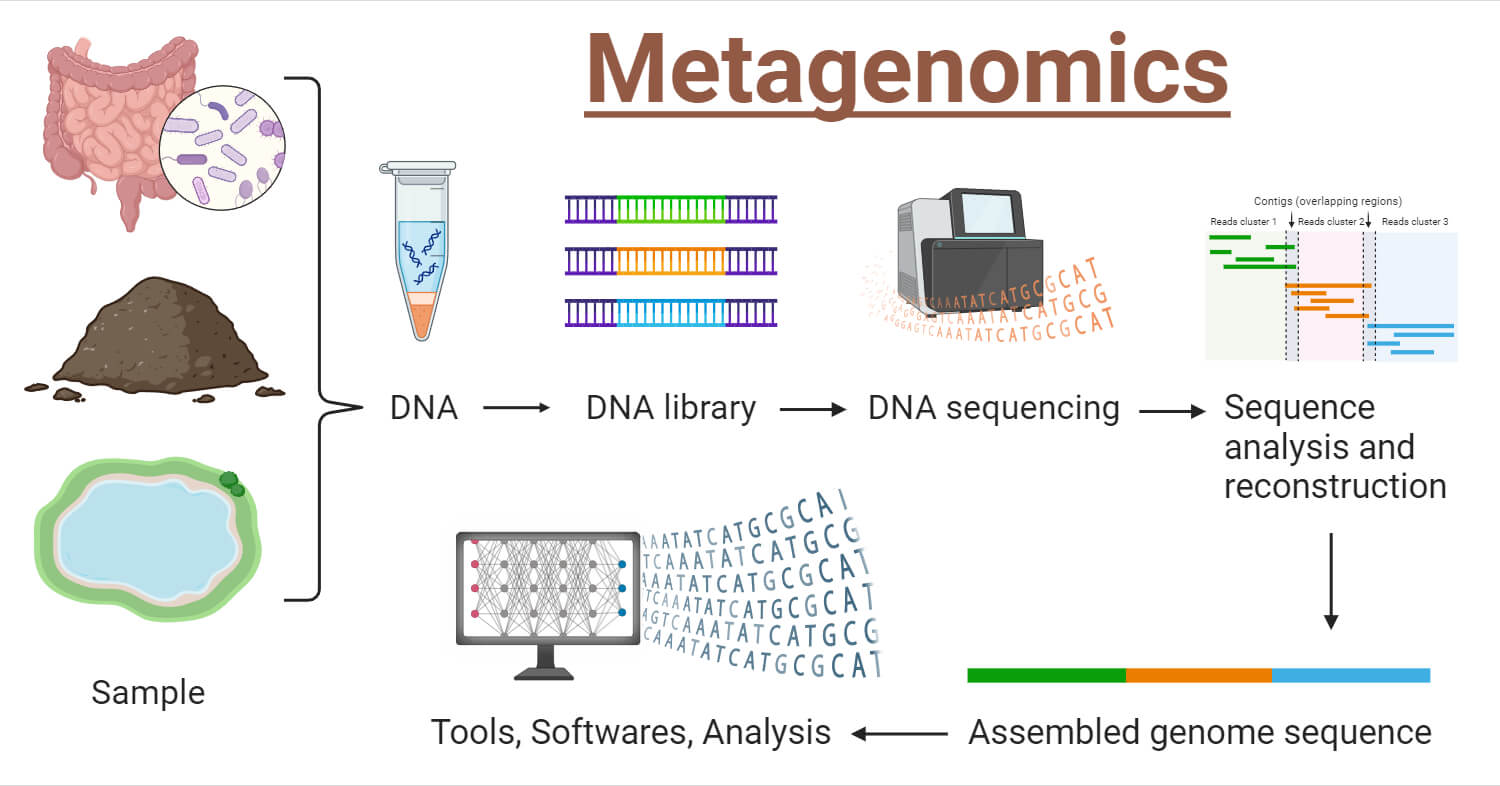
The rapid evolution of next-generation sequencing (NGS), microbiome therapeutics research, antimicrobial resistance surveillance, and precision medicine initiatives has positioned metagenomics as a cornerstone technology shaping the future of genomic analytics and microbial ecosystem intelligence.
Why the Metagenomics Market Is Important
The importance of the metagenomics market lies in its ability to unlock the hidden diversity of microbial communities that influence human health, environmental sustainability, agriculture productivity, and industrial innovation. Traditional microbiology methods identify only culturable organisms, whereas metagenomics reveals entire microbial ecosystems, enabling better disease diagnostics, pathogen surveillance, microbiome-targeted therapeutics, and ecosystem monitoring. Governments and pharmaceutical companies increasingly rely on metagenomics to support pandemic preparedness, antibiotic resistance monitoring, and global genomic surveillance initiatives. The technology also accelerates biomarker discovery and supports precision medicine by identifying microbiome–host interactions that influence disease susceptibility and treatment response. In agriculture, metagenomics enables soil microbiome profiling for crop optimization and sustainable farming practices. Similarly, environmental agencies use metagenomics to monitor water quality, biodiversity conservation, and pollution remediation. As industries move toward bio-based manufacturing and microbiome-driven therapies, metagenomics has become a strategic enabler of next-generation biotechnology innovation worldwide.
Growth Factors Driving the Metagenomics Market
The metagenomics market is expanding rapidly due to declining sequencing costs, increasing adoption of next-generation sequencing technologies, rising investments in microbiome-based therapeutics research, expanding applications in agriculture and environmental monitoring, growing demand for precision diagnostics, and global genome-mapping initiatives led by public–private collaborations. Additionally, increasing awareness about antimicrobial resistance surveillance, rising pharmaceutical R&D spending on microbiome-targeted therapies, integration of artificial intelligence with bioinformatics workflows, expansion of food safety testing programs, and supportive government initiatives for genomics infrastructure development are accelerating adoption worldwide. Furthermore, advances in portable sequencing platforms and cloud-based genomic analytics are enabling real-time microbial identification in clinical and field environments, strengthening the market’s long-term growth trajectory.
Get a Free Sample: https://www.acumenresearchandconsulting.com/request-sample/3325
Key Market Trends and Their Strategic Impact
1. Integration of Next-Generation Sequencing (NGS)
NGS technologies continue to dominate the metagenomics ecosystem by enabling large-scale microbial profiling with high accuracy and reduced turnaround time. The declining cost of sequencing has significantly improved accessibility for academic institutions, hospitals, and research laboratories globally.
Impact: Expands adoption across diagnostics, agriculture, and environmental research.
2. Microbiome-Based Therapeutics Development
Pharmaceutical companies are increasingly exploring microbiome-modulating therapies for chronic diseases, cancer, metabolic disorders, and autoimmune conditions.
Impact: Creates new revenue streams and accelerates translational research.
3. AI-Enabled Bioinformatics Platforms
Artificial intelligence improves sequencing data interpretation and microbial pattern recognition.
Impact: Reduces analysis complexity and supports real-time diagnostics.
4. Portable Sequencing Technologies
Portable nanopore sequencing systems allow field-based microbial detection.
Impact: Enables remote surveillance and decentralized diagnostics.
5. Agricultural Genomics Expansion
Metagenomics is increasingly used for soil microbiome optimization and crop productivity enhancement.
Impact: Supports sustainable agriculture initiatives globally.
Successful Global Applications of Metagenomics
Human Microbiome Project (United States)
The Human Microbiome Project established foundational knowledge about microbiome diversity and disease associations, accelerating therapeutic innovation and diagnostics.
Global Ocean Sampling Expedition
Metagenomic sequencing of marine ecosystems revealed millions of novel genes and microorganisms supporting climate and biodiversity research.
COVID‑19 Pathogen Surveillance
Metagenomics played a critical role in identifying viral variants and monitoring pathogen evolution globally.
Agricultural Soil Microbiome Mapping in Europe
European initiatives used metagenomics to optimize crop yield while reducing chemical fertilizer dependence.
Global Regional Analysis with Government Policies and Initiatives
North America
North America dominates the metagenomics market due to advanced genomics infrastructure, strong funding support, and leadership in sequencing technology innovation. Programs such as the NIH Human Microbiome Project and large-scale pathogen surveillance initiatives support regional market growth. The United States also benefits from strong collaborations between academia, biotechnology companies, and government agencies.
Policy Drivers
- NIH microbiome research funding programs
- Precision medicine initiatives
- National antimicrobial resistance surveillance programs
Impact: Sustains leadership in clinical metagenomics and sequencing platforms.
Europe
Europe represents the second-largest metagenomics market supported by strong regulatory frameworks and microbiome research collaborations. The European Union’s Horizon Europe program supports microbiome innovation across agriculture, environment, and healthcare sectors.
Policy Drivers
- Horizon Europe research funding
- European One Health Action Plan against antimicrobial resistance
- Sustainable agriculture initiatives
Impact: Accelerates environmental and agricultural metagenomics adoption.
Asia-Pacific
Asia-Pacific is the fastest-growing regional market due to expanding genomics infrastructure in China, India, Japan, and South Korea. Government-backed genome sequencing initiatives and agricultural biotechnology programs are driving adoption.
Policy Drivers
- China Precision Medicine Initiative
- India GenomeIndia Project
- Japan’s microbiome innovation programs
Impact: Rapid expansion of clinical and agricultural applications.
Latin America
Latin America is emerging as a growth region supported by biodiversity research initiatives and agricultural genomics programs.
Policy Drivers
- Brazil’s biodiversity genomics programs
- Regional microbial surveillance networks
Impact: Expanding environmental and agricultural metagenomics use cases.
Middle East & Africa
MEA adoption is increasing due to investments in infectious disease surveillance and water-quality monitoring.
Policy Drivers
- Genomic medicine programs in UAE and Saudi Arabia
- Public-health surveillance investments
Impact: Strengthening regional diagnostic capabilities.
Company Profiles: Leading Players in the Metagenomics Market
1. Illumina, Inc.
Specialization: Next-generation sequencing platforms
Key Focus Areas: Whole-genome sequencing, microbiome analysis, clinical genomics
Notable Features: High-throughput sequencing systems and strong reagent ecosystem
2024 Revenue: USD 4.37 billion
Market Share: Industry-leading sequencing platform provider
Global Presence: North America, Europe, Asia-Pacific, Latin America
Strategic Positioning: Illumina dominates sequencing workflows used in metagenomics pipelines globally.
2. Thermo Fisher Scientific, Inc.
Specialization: Scientific instruments, reagents, sequencing workflows
Key Focus Areas: Life sciences solutions, molecular diagnostics, microbiome research
Notable Features: Integrated sequencing and sample preparation ecosystem
2024 Revenue: Approx. USD 42–43 billion
Market Share: Strong multi-segment genomics solutions provider
Global Presence: Operations across 50+ countries
Strategic Positioning: Provides end-to-end metagenomics workflow solutions.
3. QIAGEN N.V.
Specialization: Sample preparation technologies and bioinformatics solutions
Key Focus Areas: Microbial detection kits, sequencing workflows, molecular diagnostics
Notable Features: Strong microbiome-targeted sample preparation kits
2024 Revenue: Approx. USD 2 billion
Market Share: Major supplier of metagenomics consumables
Global Presence: Europe, North America, Asia-Pacific
Strategic Positioning: Leading provider of nucleic acid extraction solutions.
4. PerkinElmer, Inc.
Specialization: Genomics instrumentation and diagnostics solutions
Key Focus Areas: Clinical sequencing workflows and laboratory automation
Notable Features: Integrated diagnostics and sequencing analytics platforms
2024 Revenue: Approx. USD 3 billion
Market Share: Strong clinical metagenomics presence
Global Presence: Global footprint across healthcare and research labs
Strategic Positioning: Focuses on translational research and clinical adoption.
5. Oxford Nanopore Technologies
Specialization: Portable nanopore sequencing platforms
Key Focus Areas: Real-time sequencing, field-based microbial detection
Notable Features: Portable sequencing devices such as MinION
2024 Revenue: Approx. USD 200–300 million
Market Share: Emerging leader in portable sequencing
Global Presence: Europe, North America, Asia-Pacific
Strategic Positioning: Pioneer in decentralized sequencing solutions.
Key Market Trends
- Expansion of microbiome therapeutics research
- AI-driven sequencing analytics
- Portable sequencing adoption
- Growth in agricultural genomics
- Environmental surveillance integration
- Clinical diagnostics expansion
Market Drivers
- Declining sequencing costs
- Rising precision medicine adoption
- Expansion of microbiome-based therapeutics
- Government genome-mapping initiatives
- Increasing antimicrobial resistance monitoring
Market Impact Across Industries
Healthcare: Enables rapid pathogen detection
Agriculture: Improves soil productivity
Environment: Supports biodiversity monitoring
Food Industry: Enhances contamination detection
Pharmaceuticals: Accelerates drug discovery pipelines
Market Challenges
- High sequencing infrastructure costs
- Data interpretation complexity
- Limited bioinformatics expertise
- Regulatory uncertainty in clinical adoption
- Data privacy concerns
Market Opportunities
- AI-driven microbial analytics platforms
- Microbiome therapeutics commercialization
- Portable sequencing diagnostics
- Agricultural microbiome engineering
- Cloud-based genomic data services
Future Outlook
The metagenomics market is expected to witness sustained double-digit growth driven by rapid sequencing technology innovation, increasing microbiome-based therapeutic pipelines, and global expansion of precision medicine initiatives. Governments worldwide are investing heavily in genomic surveillance infrastructure to monitor emerging infectious diseases and antimicrobial resistance threats. Simultaneously, the integration of artificial intelligence and cloud-based analytics platforms is expected to simplify large-scale microbiome data interpretation, accelerating adoption across clinical diagnostics and environmental monitoring sectors. With expanding applications across agriculture, pharmaceuticals, biotechnology, and public health ecosystems, metagenomics will remain a foundational pillar of next-generation genomic intelligence platforms through 2034.
To Get Detailed Overview, Contact Us: https://www.acumenresearchandconsulting.com/contact-us