Penicillin Active Pharmaceutical Ingredients Market Size
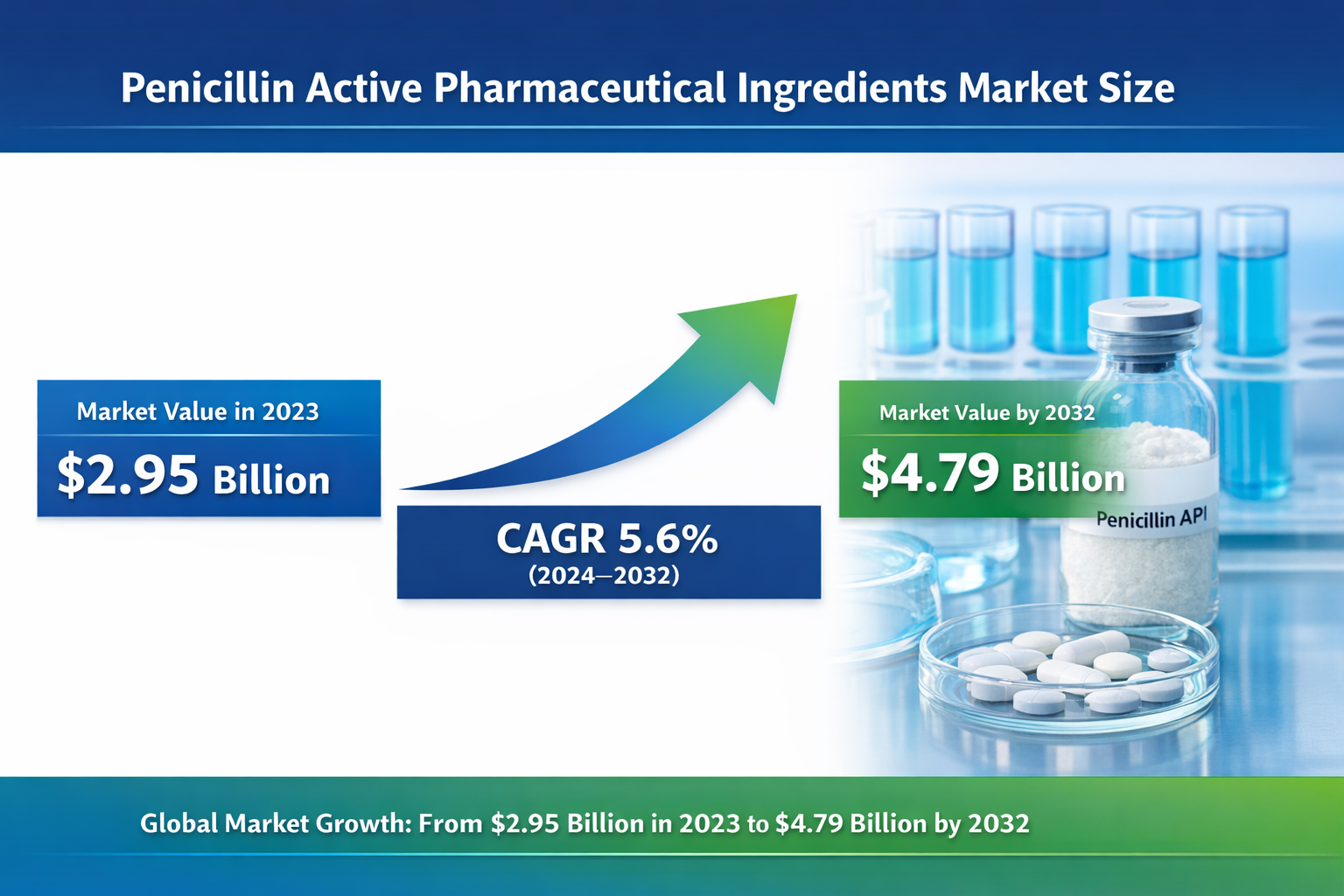
The global penicillin active pharmaceutical ingredients market was valued at USD 2.95 billion in 2023 and is projected to reach USD 4.79 billion by 2032, growing at a CAGR of 5.6% during 2024–2032.
What Is the Penicillin Active Pharmaceutical Ingredients Market?
The Penicillin Active Pharmaceutical Ingredients Market comprises the global production, distribution, and commercialization of penicillin-derived APIs used in antibiotic drug formulations. These APIs are the core bioactive substances responsible for combating bacterial infections in finished pharmaceutical products.
Penicillin APIs include compounds such as penicillin G, amoxicillin, ampicillin, and other semi-synthetic derivatives. They are extensively used to manufacture antibiotics for respiratory tract infections, skin and soft tissue infections, urinary tract infections, and other bacterial diseases. Due to their proven efficacy, safety profile, and cost-effectiveness, penicillin-based antibiotics remain a cornerstone of antimicrobial therapy.
From a market perspective, penicillin APIs are crucial to ensuring the continuous supply of essential medicines globally, particularly in both hospital and outpatient care settings. The market has shown steady growth, supported by rising healthcare demand, expanding access to medicines, and sustained use of generic antibiotics.
Get a Free Sample: https://www.acumenresearchandconsulting.com/request-sample/3773
Market Trends
Rising Demand for Antibiotics
One of the most prominent trends in the penicillin API market is the consistent demand for antibiotics driven by the ongoing prevalence of bacterial infections worldwide. Penicillin-based drugs continue to be prescribed as first-line treatments in many therapeutic areas, ensuring stable demand for their active ingredients.
Shift Toward Oral Antibiotic Formulations
Oral dosage forms dominate the market due to ease of administration, patient compliance, and suitability for outpatient treatment. The preference for oral penicillin antibiotics has significantly influenced API production volumes and formulation strategies.
Growth of Generic Pharmaceuticals
The increasing penetration of generic drugs has strongly impacted the market. With the expiration of patents for branded antibiotics, manufacturers are focusing on high-volume production of generic penicillin APIs, particularly to serve cost-sensitive and emerging markets.
Technological Advancements in Manufacturing
API manufacturers are increasingly adopting advanced fermentation technologies, process optimization techniques, and automation to improve yields, reduce costs, and ensure consistent product quality. These advancements enhance operational efficiency and strengthen global supply chains.
Heightened Focus on Quality and Compliance
Stricter regulatory oversight and quality standards have led to greater emphasis on compliance with good manufacturing practices. Companies are investing in quality control systems and validated production processes to meet international regulatory expectations.
Market Dynamics
Key Drivers
High Burden of Infectious Diseases: Persistent and recurring bacterial infections globally continue to drive demand for penicillin-based antibiotics.
Expansion of Generic Drug Manufacturing: The affordability and widespread acceptance of generics support large-scale API production.
Cost-Effective Treatment Options: Penicillin antibiotics remain among the most economical antimicrobial therapies, sustaining long-term market relevance.
Technological Improvements: Enhanced production efficiency and scalability encourage market expansion.
Restraints
Antimicrobial Resistance: The growing issue of bacterial resistance to antibiotics poses a challenge to the long-term effectiveness of traditional penicillin drugs.
Stringent Regulatory Requirements: Compliance with evolving global regulations increases production costs and operational complexity.
Supply Chain Vulnerabilities: Dependence on specific raw materials and geographic concentration of manufacturing can disrupt supply continuity.
Opportunities
Emerging Market Expansion: Rising healthcare investments and improving access to medicines in developing regions create significant growth opportunities.
Product Innovation: Development of improved formulations, combinations, and delivery mechanisms can enhance therapeutic outcomes.
Strategic Investments in R&D: Research focused on improving efficacy and reducing resistance can support sustained market growth.
Challenges
Price Pressure: Intense competition among generic manufacturers often leads to reduced margins.
Environmental and Safety Concerns: Antibiotic manufacturing processes face increasing scrutiny regarding environmental impact and waste management.
Regional Analysis
North America
North America represents a major share of the penicillin API market, supported by advanced healthcare infrastructure, high antibiotic usage, and strong pharmaceutical manufacturing capabilities. Regulatory rigor and emphasis on quality further shape market dynamics in the region.
Asia-Pacific
Asia-Pacific is the fastest-growing regional market, driven by large-scale API manufacturing, lower production costs, and expanding domestic healthcare demand. Countries such as India and China play a central role as global suppliers of penicillin APIs, serving both local and international markets.
Europe
Europe maintains steady growth supported by established pharmaceutical companies and strong regulatory frameworks. However, manufacturers in the region face challenges related to cost competitiveness and increasing pressure from lower-cost producers in Asia.
Latin America, Middle East, and Africa
These regions are witnessing gradual growth due to improving healthcare access, rising awareness of infectious disease treatment, and increasing government efforts to strengthen pharmaceutical supply chains.
Recent Developments
Recent developments in the penicillin API market reflect broader changes within the global pharmaceutical manufacturing landscape. There has been a noticeable shift in API production toward Asia, driven by cost efficiencies and manufacturing scale. At the same time, manufacturers are investing in modernization of production facilities and compliance systems to meet international quality standards.
Industry consolidation, strategic partnerships, and capacity expansions are being pursued to strengthen supply reliability and global reach. Additionally, regulatory focus on antibiotic stewardship and sustainable manufacturing practices continues to influence market strategies and investment decisions.
To Get Detailed Overview, Contact Us: https://www.acumenresearchandconsulting.com/contact-us