Biomimetic Materials Market Size
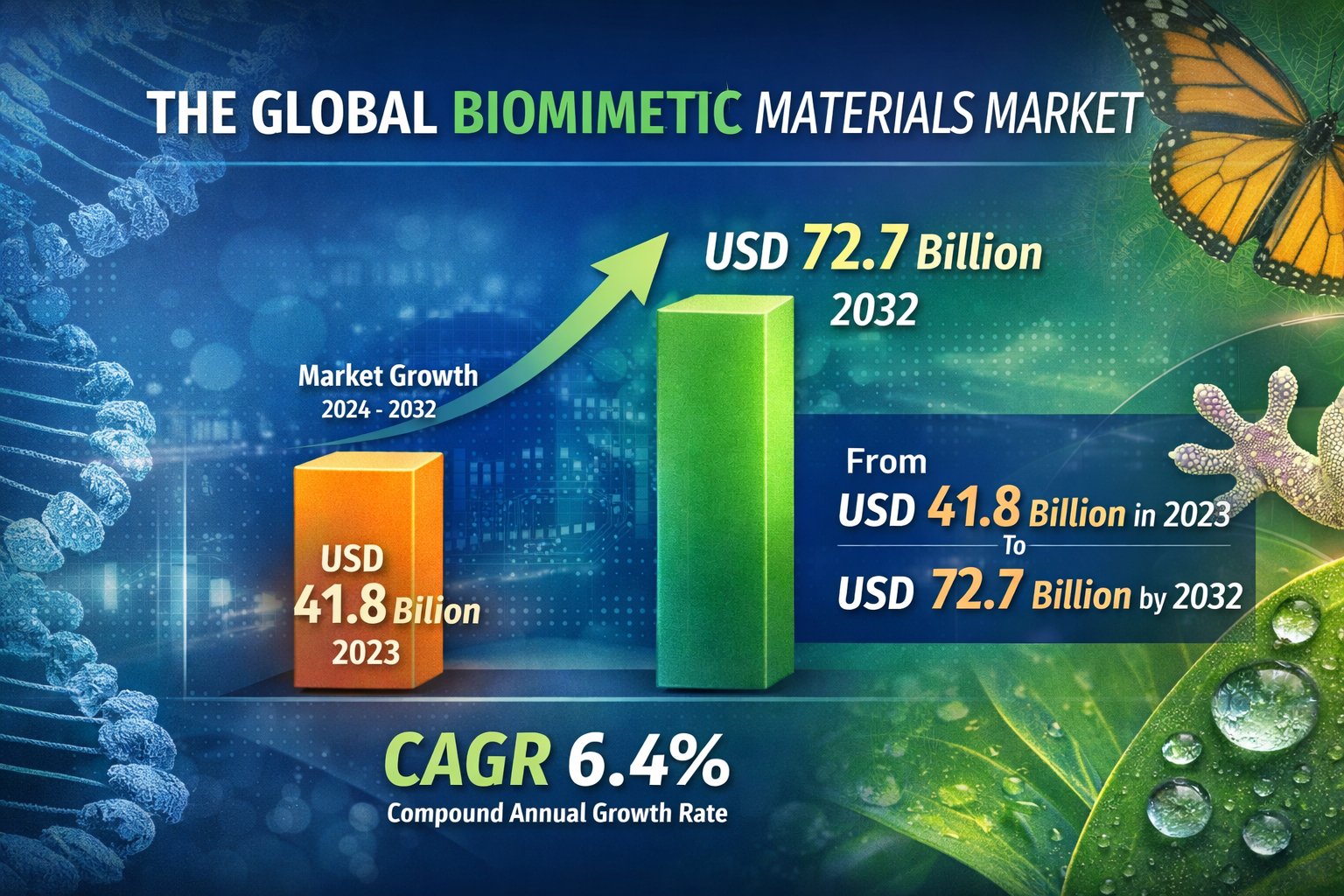
The global biomimetic materials market was valued at approximately USD 41.8 billion in 2023 and is forecast to grow to around USD 72.7 billion by 2032, at a CAGR of 6.4% over the period from 2024 to 2032.
What Is the Biomimetic Materials Market?
At its core, the Biomimetic Materials Market encompasses the development, production, and application of synthetic materials engineered to mimic natural biological features and processes. These materials are designed to emulate characteristics such as adaptability, resilience, self‑repair, and hierarchical structure that are observed in living organisms.
Biomimetic materials derive inspiration from nature’s efficiency—whether recreating the strength of bone in biomedical implants or the self‑healing traits of certain plants for industrial coatings. The primary goal is to harness nature’s optimized designs to create materials that are more sustainable, durable, and functional than traditional alternatives.
Scope and Significance
The market has a broad scope covering multiple material types—such as biomimetic metals & alloys, ceramics & glass, polymers, and other composites—and spans diverse applications including electronics, automotive, defense, and especially medical sectors.
From advanced drug delivery systems to lightweight structural components, these materials spur innovation and address critical industry needs like sustainability, performance enhancement, and reduced lifecycle costs. Their ability to functionally mimic biologically optimized systems makes them significant for both commercial products and cutting‑edge research.
Get a Free Sample: https://www.acumenresearchandconsulting.com/request-sample/3744
Market Trends
1. Rapid Market Expansion
The global biomimetic materials market is forecast to grow from USD 41.8 billion in 2023 to USD 72.7 billion by 2032, reflecting a compound annual growth rate (CAGR) of 6.4% over this period.
2. Healthcare Leads Demand
The medical segment dominates the market, with biomimetic materials increasingly used in tissue engineering, prosthetics, drug delivery, diagnostics, and regenerative medicine. In 2023, the medical application accounted for roughly 77% of the market, driven by improved biocompatibility and functionality.
3. Funding and Research Support
There is a notable increase in funding for biomimetic research, particularly at the intersection of biotechnology, material science, and manufacturing. Efforts such as 3D printing of biomimetic structures are expanding design possibilities and accelerating adoption across industries.
4. Sustainability and Eco‑Efficiency
Sustainable innovation is a key trend as industries seek eco‑friendly materials. Biomimetic designs reduce waste, enhance energy efficiency, and offer alternatives to conventional materials, aligning with broader environmental goals.
Market Dynamics
A detailed analysis of market dynamics highlights key drivers, restraints, and opportunities shaping the biomimetic materials landscape:
Drivers
Demand for Sustainable and High‑Performance Materials: Industries such as aerospace, automotive, and healthcare increasingly seek materials that offer enhanced performance with reduced environmental impact.
Technological Innovation: Advances in biotechnology, nanotechnology, and additive manufacturing (e.g., 3D printing) are enabling biomimetic designs that were previously unattainable.
Cost‑Efficiency Through Durability: Self‑healing and adaptive materials help reduce maintenance costs and improve product life cycles, attracting investment.
Restraints
High R&D Costs: Significant investment is required to design and bring new biomimetic materials to market.
Complexity of Natural Systems: Replicating intricate biological structures presents technical challenges that can slow adoption.
Limited Awareness: Adoption in traditional sectors remains limited due to unfamiliarity with biomimetic solutions.
Opportunities
Regenerative Medicine and Tissue Engineering: Biomimetic scaffolds and implantable materials hold tremendous potential to revolutionize healthcare outcomes.
Energy‑Efficient Solutions: The development of adaptive and self‑healing materials offers opportunities in sectors like construction, wind energy, and robotics.
Regional Analysis
The biomimetic materials market shows strong global dispersion, with varying regional dynamics:
North America
North America currently leads the global market with strong adoption driven by advanced healthcare systems, extensive research infrastructure, and significant technology investments. The region held the largest revenue share in 2023, with a value of approximately USD 17.1 billion.
Key factors include robust R&D ecosystems, presence of major industry players, and supportive regulatory frameworks which accelerate commercialization of biomimetic innovations.
Asia‑Pacific
Asia‑Pacific is the fastest‑growing region, expected to achieve a CAGR exceeding 7.1% during the forecast period. Rapid industrialization, increasing healthcare investments, and expanding manufacturing capabilities in countries such as China, India, and Japan are fueling growth.
Lower production costs and growing interest in advanced materials further catalyze market expansion in this region.
Europe and Other Regions
Europe, Latin America, and Middle East & Africa also contribute to market growth, supported by innovation initiatives and emerging application areas. However, their current shares lag behind North America and Asia‑Pacific.
Recent Developments
Recent developments in the biomimetic materials field highlight increasing global activity:
Increased Research Funding: Public and private funding for biomimetic research continues to grow, particularly in healthcare and material science applications.
Corporate Innovation Initiatives: Industry players are investing in sustainable biomimetic materials—such as bio‑based construction composites—to meet global sustainability targets.
Strategic Partnerships and Distribution Agreements: Companies are forming alliances to expand distribution channels for advanced biomimetic products, especially in medical devices.
Conclusion
The Biomimetic Materials Market is a vivid example of how nature’s engineering can drive human innovation. With applications spanning medical breakthroughs, sustainable manufacturing, and high‑performance industrial materials, this market is positioned for significant growth through 2032 and beyond. Supported by escalating research, expanding global applications, and strong regional development, biomimetic materials are defining the future of next‑generation materials science.
To Get Detailed Overview, Contact Us: https://www.acumenresearchandconsulting.com/contact-us