Luer Lock Connector Market Size
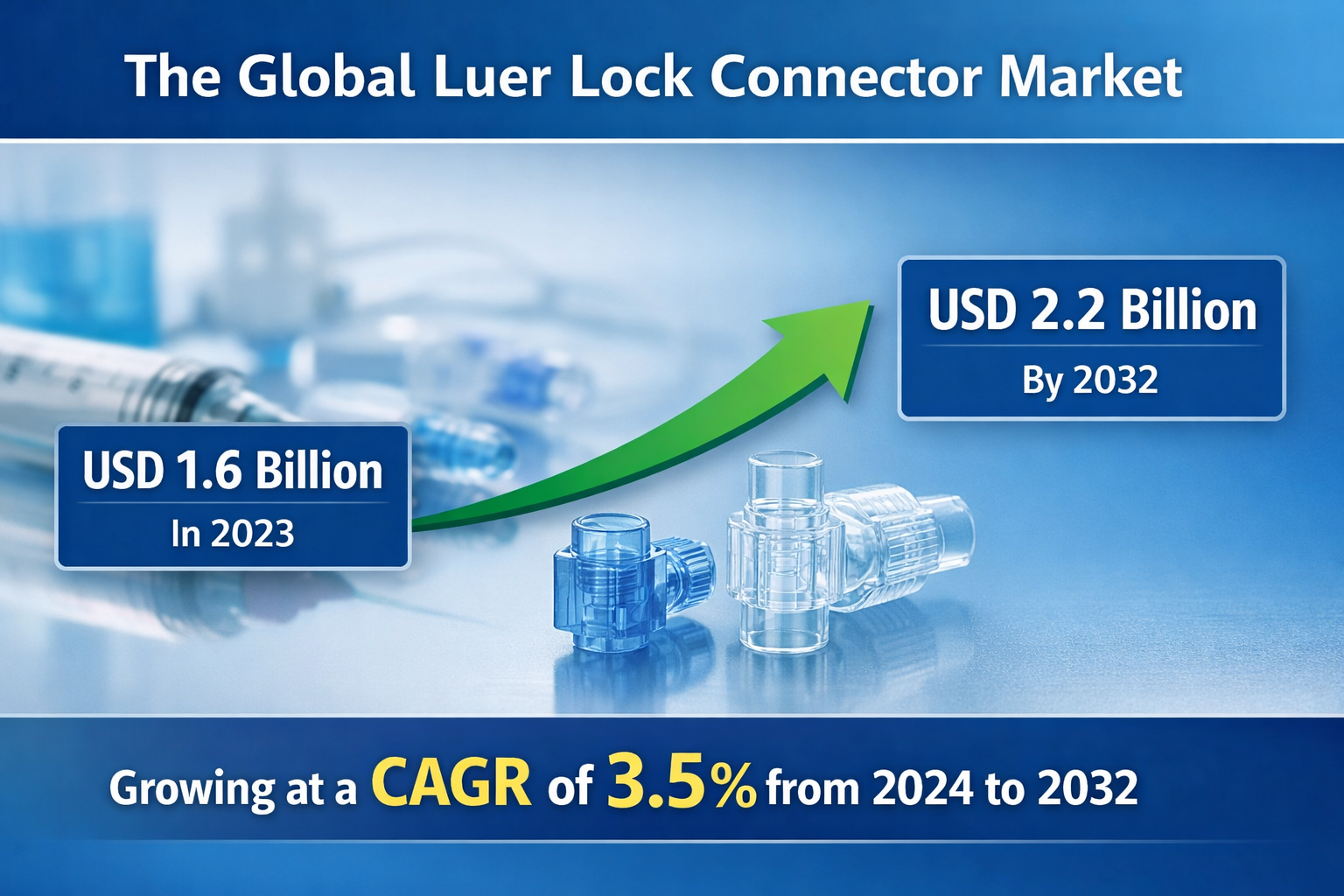
The global luer lock connector market was valued at approximately USD 1.6 billion in 2023 and is projected to reach USD 2.2 billion by 2032, growing at a CAGR of 3.5% from 2024 to 2032.
What Is the Luer Lock Connector Market?
A Luer Lock Connector is a standardized medical fitting designed to securely join two pieces of medical equipment — such as syringes, needles, catheters, and IV tubing — through a threaded male‑to‑female interface. This design ensures:
Safe, leak‑proof connections
Minimized risk of accidental disconnections
Reduced contamination or infection hazards
Today’s Luer Lock systems are used widely in intravenous therapy, infusion sets, anesthetic delivery, blood collection, and more — making them fundamental in clinical environments globally.
The global market for these connectors was valued at approximately USD 1.6 billion in 2023 and is expected to grow to around USD 2.2 billion by 2032, at a compound annual growth rate (CAGR) of about 3.5%.
Market Trends
The Luer Lock Connector market is benefiting from several ongoing trends that are shaping its growth trajectory:
Rising Demand for Precision & Patient Safety
Healthcare providers are increasingly prioritizing safety and precision in medical interventions — from injections to catheterization procedures. Luer Lock connectors help standardize fluid delivery systems, contributing to safer clinical outcomes.
Technological Advancement
Manufacturers are innovating connector designs with better materials, improved durability, and increased compatibility across medical equipment. This enhances performance in hospital and outpatient environments.
Expanding Applications
With healthcare expanding into home care, ambulatory centers, and long‑term care facilities, the utility of secure connectors rises — leading to broader market adoption.
Focus on Infection Control
As infection control standards tighten worldwide, connectors that ensure leak‑proof interfaces become essential in clinical protocols, fueling market growth.
Market Dynamics
Understanding the forces driving and shaping this market helps clarify future opportunities and constraints.
Key Drivers
Increasing demand for minimally invasive procedures that rely on precise fluid delivery
Technological innovations improving connector performance and versatility
Growing prevalence of chronic diseases and aging populations, elevating medical device usage
Emphasis on infection prevention in hospitals and clinics worldwide
Market Restraints
Strict regulatory and compliance standards increase production and certification costs
Competition from alternative connector systems or technologies may limit expansion
Opportunities
Innovative connector materials and designs, such as enhanced polymers or wearable‑device integration
Growth opportunities in home healthcare and ambulatory centers as care continues decentralizing
Regional Analysis
The Luer Lock Connector market has distinctive performance patterns across major global regions:
North America
Held the largest share (~34%) of the market in 2023
Driven by advanced healthcare infrastructure, high medical device spending, and strong regulatory frameworks
Asia‑Pacific
Positioned as the fastest‑growing regional market through 2032
Expansion driven by rising healthcare spending, improving infrastructure, and increasing awareness of patient safety standards
Other Regions
Europe, Latin America, and the Middle East & Africa also contribute to the overall market, supported by healthcare investments and demographic trends
Recent Developments
The market continues to evolve with innovation and expanded applications of connectors. Luer Lock connector usage is increasingly standardized across medical devices, reinforcing regulatory trends toward precision fluid management.
Final Thoughts
The Luer Lock Connector Market is steadily rising as a crucial healthcare support system. With growing demand for safe, reliable fluid delivery solutions and expanding medical procedures worldwide, this market is expected to remain resilient and innovate continuously. Technology advancements, patient safety standards, and regional healthcare growth remain central to its future trajectory.
To Get Detailed Overview, Contact Us: https://www.acumenresearchandconsulting.com/contact-us