Fetal Monitoring Market Size
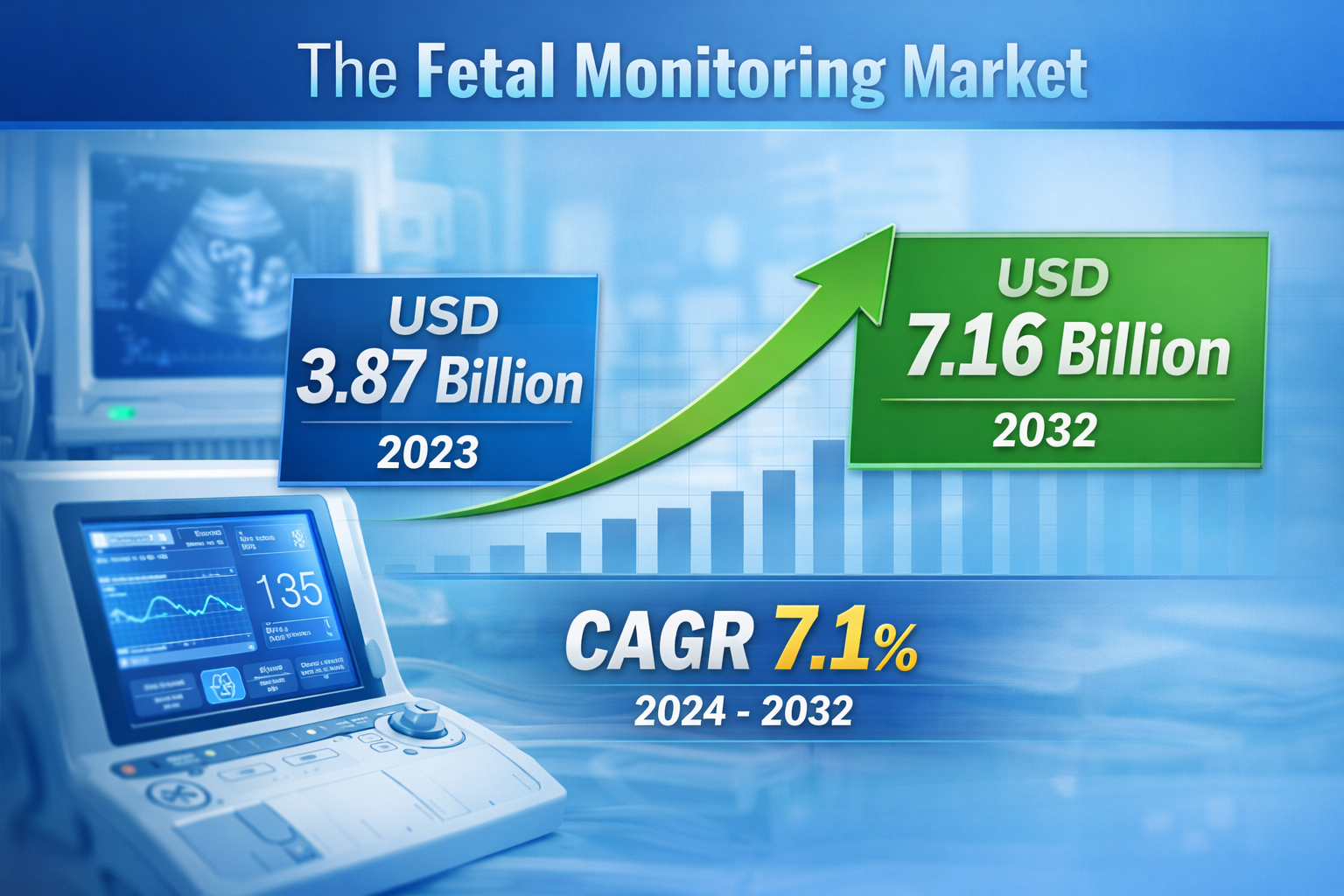
In 2023, the global fetal monitoring market was valued at USD 3.87 billion and is projected to grow to USD 7.16 billion by 2032, registering a compound annual growth rate (CAGR) of 7.1% during the forecast period.
What is the Fetal Monitoring Market?
The Fetal Monitoring Market refers to the global industry involved in producing, distributing, and deploying devices and systems that monitor vital signs and physiological parameters of a fetus during pregnancy and childbirth. This includes tools that continuously or periodically track fetal heart rate, movements, uterine contractions and other indicators to assess fetal health and detect early signs of distress.
Fetal monitoring plays a critical role in modern obstetrics, helping healthcare providers make informed decisions that enhance outcomes for both mother and baby. It encompasses external monitoring systems like ultrasounds and internal monitoring methods such as fetal scalp electrodes, each providing information with varying levels of precision and clinical application. By ensuring timely detection of complications like fetal hypoxia or irregular heart patterns, these systems contribute significantly to safer pregnancies and childbirth practices.
Get a Free Sample: https://www.acumenresearchandconsulting.com/request-sample/3667
Market Trends
1. Growing Demand for Non‑Invasive and Wireless Solutions
The industry is witnessing a notable shift toward non‑invasive monitoring technologies over traditional invasive methods. Non‑invasive solutions offer real‑time insights into fetal health without the risks associated with internal procedures, increasing patient comfort and safety. Portable and wireless monitors especially are gaining traction as they enable continuous monitoring outside clinical settings.
2. Rising Maternal Healthcare Awareness
There is an increasing global focus on maternal and fetal health, encouraged by healthcare programs and education campaigns. Expectant mothers and healthcare providers are more informed about complications such as preterm labor, stimulating the adoption of advanced fetal monitoring devices earlier and more frequently in prenatal care.
3. Technological Innovation
Innovation in fetal monitoring — including digital integration, real-time data analysis, and remote monitoring — is shaping how clinicians track and respond to fetal health indicators. These advancements contribute to more accurate diagnostics and improved clinical outcomes.
Market Dynamics
Key Drivers
Rising incidence of high‑risk pregnancies: Increased prevalence of conditions such as gestational diabetes and hypertension requires consistent fetal surveillance.
Technological advancements: Evolving technologies such as continuous, non‑invasive, and wireless fetal monitors are expanding clinical capabilities.
Growing healthcare expenditure: Expanding access to medical care and rising healthcare investment globally support increased fetal monitoring adoption.
Restraints
High equipment cost: Advanced monitoring systems can be expensive, limiting adoption in lower-income regions or small healthcare centers.
Shortage of skilled professionals: Operating and interpreting complex monitoring technologies requires trained clinical staff, which may be scarce in some markets.
Accuracy concerns: Certain monitoring methods may still face challenges in reliability, affecting clinical trust and use.
Opportunities
Telemedicine and remote monitoring: Growth in remote healthcare delivery creates prospects for expanding fetal monitoring services into underserved areas or home settings.
Portable monitoring devices: User-friendly, portable systems — potentially suitable for prenatal home monitoring — open new consumer and clinical applications.
R&D investment: Ongoing investment in innovative fetal health solutions — including AI-enabled analytics and smart monitoring platforms — promises sustained market evolution.
Regional Analysis
The global Fetal Monitoring Market shows varying growth patterns across regions:
North America
North America holds the largest share of the fetal monitoring market, supported by advanced healthcare infrastructure, high adoption of sophisticated monitoring technologies, and strong clinical awareness of prenatal care best practices. The United States, in particular, leads market demand due to widespread integration of electronic fetal monitoring in hospitals and maternity centers.
Europe
Europe remains a significant market due to established healthcare systems and increasing focus on maternal health. Its growth is supported by rising awareness and healthcare spending across Western and Central European nations.
Asia‑Pacific
The Asia‑Pacific region is poised for the fastest growth rate, driven by expanding healthcare infrastructure, rising birth rates, increasing disposable incomes, and growing awareness of maternal and fetal well-being. Countries like China and India are expected to fuel significant market expansion in the coming years.
Latin America and Middle East & Africa
Though smaller in current size, markets in Latin America and the Middle East & Africa are expected to grow steadily due to rising healthcare investment, broader access to medical care, and outreach efforts focused on prenatal health.
Recent Developments
Several recent developments highlight broader industry momentum:
Advancements in monitoring technology: Adoption of non‑invasive and wireless fetal monitoring systems is expanding, reflecting a trend toward more comfortable, real-time evaluation tools.
Increased focus on portable devices: Portable fetal monitors that provide real-time monitoring even outside hospital environments are gaining market share, especially as consumer demand for accessible prenatal care grows.
Integration with digital healthcare: Systems integrating with advanced analytics, remote reporting, and telehealth platforms are helping clinicians analyze fetal data more efficiently and make timely decisions.
These developments underscore a broader shift toward innovation, accessibility, and patient-centric care in fetal monitoring, aligning with overall healthcare digitization trends.
Conclusion
The Fetal Monitoring Market is on a strong growth trajectory, propelled by rising healthcare awareness, technological advancements, and growing global demand for maternal and prenatal care solutions. With projected growth from USD 3.87 billion in 2023 to USD 7.16 billion by 2032 at a 7.1% CAGR, this market presents significant opportunities for healthcare providers, technology developers, and investors alike.
As emerging regions expand clinical capabilities and innovation continues to redefine fetal monitoring tools, the market’s future looks promising — characterized by safer pregnancies, greater access to care, and improved outcomes for mothers and infants across the globe.
To Get Detailed Overview, Contact Us: https://www.acumenresearchandconsulting.com/contact-us