Medical Spa Market Size
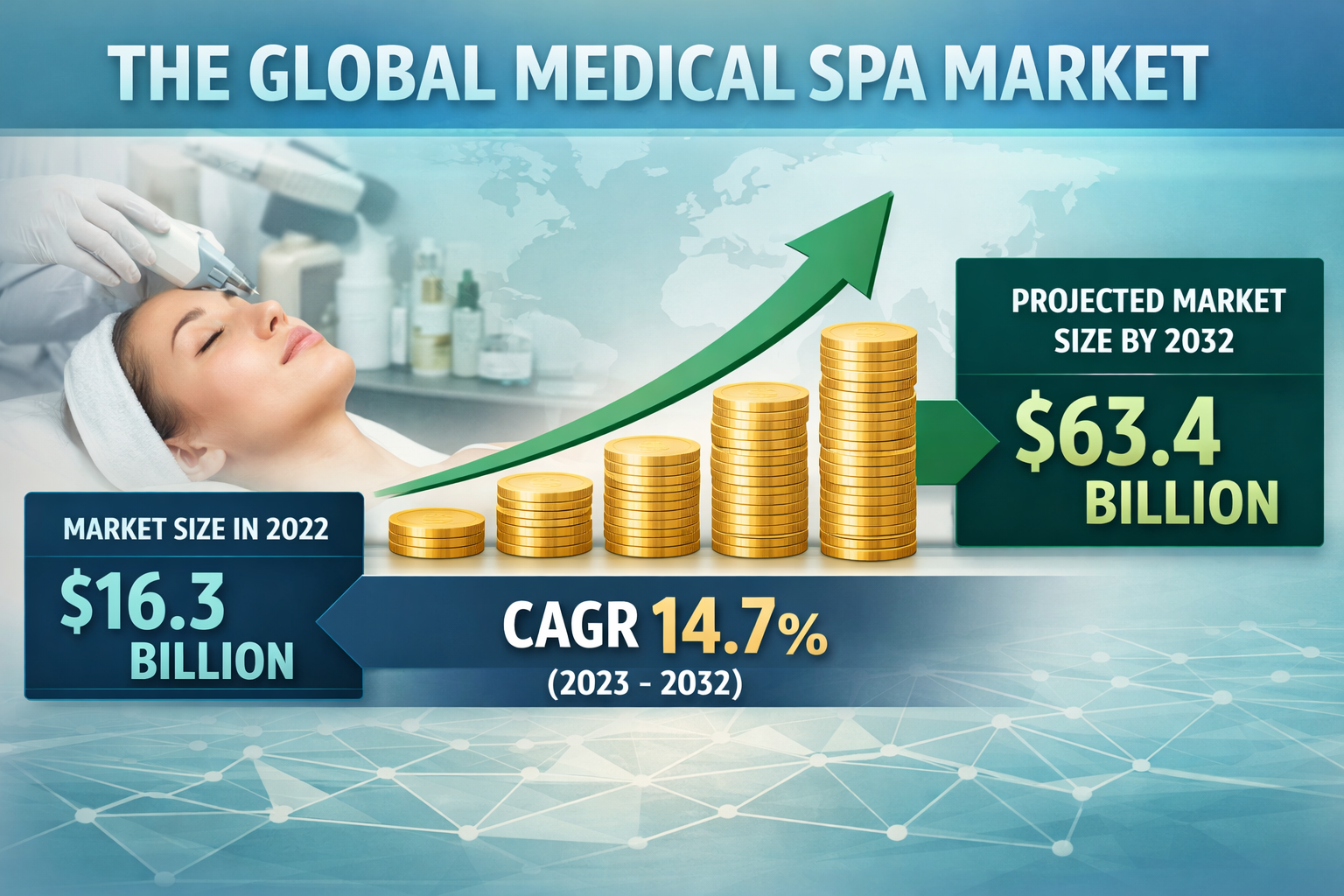
The global medical spa market size was valued at approximately USD 16.3 billion in 2022 and is forecast to expand rapidly through the next decade.
What Is the Medical Spa Market?
The Medical Spa Market refers to the global industry composed of medical spas — hybrid facilities offering both traditional spa services and medically supervised aesthetic procedures. These establishments typically provide treatments such as laser hair removal, Botox and dermal fillers, chemical peels, microdermabrasion, body contouring, and more, all under the supervision of licensed clinicians such as physicians, dermatologists, or nurse practitioners.
Medical spas stand at the intersection of cosmetic enhancement and wellness, blending beauty‑oriented treatments with a clinical focus on safety, efficacy, and personalized care. They have grown significantly as consumer preferences shift toward treatments with minimal downtime and visible results. This balance of medical precision and spa‑like experiences distinguishes the medical spa market from traditional spas or purely medical dermatology services.
Significance:
Demand is fueled by consumer interest in non‑surgical aesthetics, anti‑aging treatments, and wellness integrations.
As medical spas integrate advanced technologies and holistic wellness offerings, their market relevance continues to rise across age and gender demographics.
Market Trends
The medical spa market is evolving quickly, influenced by technological innovation, changing consumer behaviour, and broader wellness trends.
1. Technology‑Driven Personalization
Advanced technologies such as AI‑powered skin analysis tools and precision laser equipment are enabling more tailored and effective treatments. These tools enhance diagnostics, improve outcomes, and streamline service delivery — making medical spa treatments more appealing and accessible.
2. Growth in Non‑Invasive Procedures
Consumers increasingly favour non‑surgical aesthetic solutions that offer noticeable cosmetic improvement with minimal recovery time, such as injectables, body contouring, and energy‑based therapies.
3. Holistic Wellness Integration
Medical spas are broadening service portfolios to include wellness elements like stress management, mindfulness, and therapeutic services that promote overall well‑being alongside cosmetic enhancement.
4. Eco‑Conscious and Organic Preferences
There is rising interest in natural, eco‑friendly treatment products and sustainable practices within spa environments, reflecting greater consumer awareness of environmental and health impacts.
Market Dynamics
Understanding market dynamics involves examining the various drivers, restraints, opportunities, and challenges shaping the medical spa landscape.
Key Market Drivers
Increasing Demand for Aesthetic Treatments: Rising global interest in non‑invasive and minimally invasive procedures fuels market growth.
Aging Global Population: As people age, demand for anti‑aging and skin‑rejuvenation solutions increases, supporting long‑term market expansion.
Technological Innovation: New devices and treatment modalities elevate the safety and effectiveness of offerings, attracting broader customer segments.
Wellness and Self‑Care Trends: A societal shift toward holistic health and appearance consciousness encourages more frequent and diverse medical spa usage.
Market Restraints
Regulatory Hurdles: Varying regulatory environments and compliance requirements can slow market entry and limit service offerings in certain countries.
High Initial Investment: Setting up advanced medical spa facilities requires significant capital investment in infrastructure, equipment, and trained personnel.
Opportunities
Expansion into Emerging Regions: Developing markets in Asia‑Pacific and Latin America present strong growth potential due to rising disposable incomes and increasing aesthetic awareness.
Telemedicine and Digital Consultations: Virtual consultations and digital platforms help expand client reach and support personalized treatment planning.
Challenges
Competition and Market Saturation: High competition, especially among small independent providers, can compress margins and make differentiation essential.
Fragmented Market Structure: With many single‑location independent providers, consolidation remains uneven — creating both challenges and opportunities for investment and scale‑ups.
Regional Analysis
The medical spa market exhibits varied performance across global regions, each with unique drivers and growth patterns.
North America
North America remains the largest regional market, supported by high consumer spending, widespread acceptance of aesthetic services, and strong healthcare infrastructure. The United States and Canada are key contributors to this dominance.
Asia‑Pacific (APAC)
The APAC region is one of the fastest‑growing markets, driven by rising disposable incomes, rapid urbanisation, and expanding medical tourism. Countries including China, India, Japan, and South Korea are major contributors to regional growth.
Europe
Europe holds a significant share with mature markets in Germany, France, and the UK. The region’s strong spa culture and emphasis on holistic lifestyle trends continue to support growth.
Latin America & MEA
While smaller in market size, Latin America and the Middle East & Africa demonstrate potential growth, particularly in urban centres with rising demand for aesthetic and wellness services.
Recent Developments
Staying abreast of recent developments in the medical spa landscape highlights how dynamic the industry has become:
Mergers & Acquisitions
Princeton Medspa Partners expanded its portfolio through the acquisition of Allura Skin, Laser & Wellness Clinics, illustrating ongoing consolidation and brand scaling within the industry.
Strategic Collaborations
Obagi Medical partnered with a med spa chain to evaluate new hyaluronic injectable treatments, showcasing how product innovation and clinical partnerships are advancing service offerings.
Industry Events
Events like the Medical Spa Show foster community, knowledge sharing, and business growth for med spa professionals.
Franchise and Expansion Moves
VIO Med Spa’s continued expansion highlights the growing franchise and scalability opportunities within the market.
Innovation in Marketing
The introduction of AI‑powered client engagement tools demonstrates how digital innovations are aiding customer interaction and business growth.
Regulatory Landscape
Regulatory scrutiny on drug advertising involving medical spas underscores the importance of compliance and transparent communication in marketing medical procedures.
Conclusion
The Medical Spa Market is rapidly expanding as consumer preferences evolve toward preventive wellness, aesthetic improvement, and personalized care. Fueled by technological innovation and economic trends, the market continues to attract investment, consolidation, and entrepreneurial activity worldwide. With strong growth prospects across regions and a sustained shift toward holistic self‑care, medical spas are well‑positioned to remain at the forefront of the wellness and aesthetic services industry in the years to come.
To Get Detailed Overview, Contact Us: https://www.acumenresearchandconsulting.com/contact-us