Dental Burs Market Size
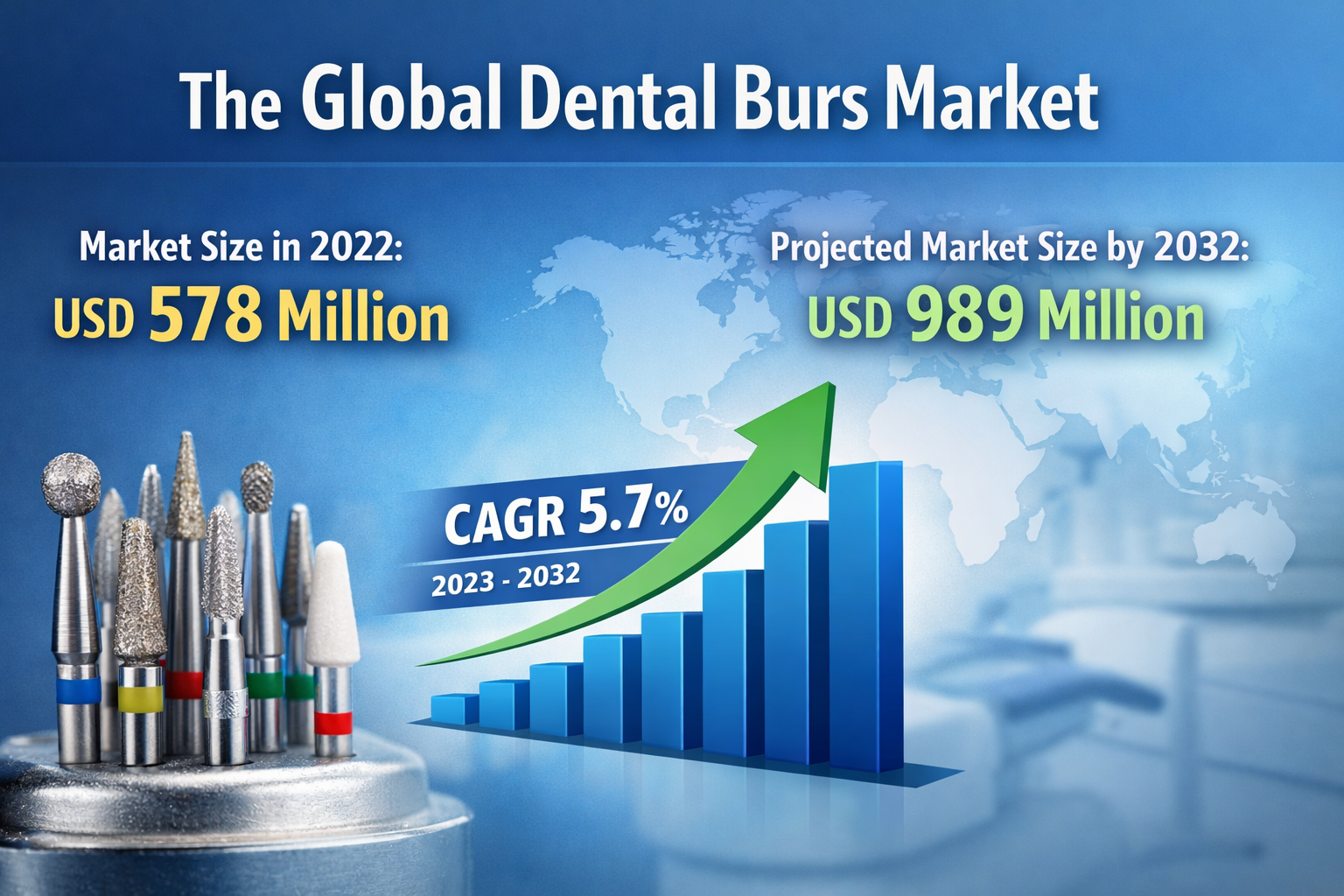
The global dental burs market size was valued at USD 578 million in 2022 and is expected to reach USD 989 million by 2032, with a robust CAGR of approximately 5.7% over the forecast period.
Understanding the Dental Burs Market
The Dental Burs Market refers to the global industry centered on the production, distribution, and utilization of dental burs — precision rotary instruments used by dental professionals during routine and specialty procedures. Dental burs are essential tools designed to cut, grind, and shape hard tissues such as enamel, dentin, and bone during restorative, surgical, orthodontic, and prophylactic treatments. Their significance stems from their role in facilitating precise cavity preparation, contouring, and polishing, thereby directly influencing clinical outcomes and treatment efficiency. Dental burs come in a wide variety of materials including diamond, carbide, ceramic, and steel variants, each tailored for specific clinical applications and speed requirements in dental workflows.
The scope of the dental burs market spans multiple end‑users — from dental clinics and hospitals to academic research institutions — and caters to a range of procedures from simple restorations to advanced implantology. As dentistry evolves with technological advances and rising demand for minimally invasive techniques, the dental burs market continues to gain importance as an indispensable part of dental care infrastructure globally.
Market Trends in the Dental Burs Market
The dental burs market has witnessed significant evolution in recent years, driven by several key trends that reflect broader shifts in dental practice and technology:
Technological Advancements
Growing adoption of advanced material technologies such as multi‑layer diamond coatings, hybrid carbide designs, and nano‑coated burs that deliver enhanced durability, cutting efficiency, and reduced vibration during procedures.
Dental burs compatible with CAD/CAM systems and digital workflows are gaining traction, enabling precise shaping and milling during chairside restorations and digital treatment planning.
Consumer and Clinical Behavior Shifts
Rising demand for single‑use and pre‑sterilized burs to address infection control and streamline procedural workflows within dental clinics and hospitals.
Minimally invasive dentistry continues to grow, with clinicians prioritizing burs that preserve healthy tissue and enhance patient comfort.
Emerging Opportunities
Product differentiation through specialty burs — such as those for pediatric dentistry, orthodontic debonding, or implant site preparation — is reshaping procurement preferences.
Integration with digital inventory and AI‑assisted order systems is improving clinic operational efficiency and reducing downtime for re‑ordering essential burs.
Get a Free Sample: https://www.acumenresearchandconsulting.com/request-sample/3345
Market Dynamics: Drivers, Restraints, Opportunities, Challenges
A comprehensive understanding of the dental burs market requires examining the forces shaping its growth:
Key Drivers
Increasing dental procedure volume due to rising oral health awareness and preventive care focus drives demand for dental burs worldwide.
The shift towards cosmetic and restorative dentistry is encouraging clinics to invest in specialized burs designed for precision.
Restraints
High costs associated with premium burs and advanced dental equipment limit adoption in cost‑sensitive markets.
Regulatory compliance, especially in sterilization and product registration, continues to challenge smaller manufacturers and slow market entry for innovative products.
Opportunities
Rapid growth in dental tourism and expanding healthcare access in emerging economies present strong demand potential for dental burs.
Sustainable and eco‑friendly dental burs — including biodegradable or recyclable variants — are gaining interest aligned with broader environmental priorities.
Challenges
Raw material price volatility, particularly for tungsten carbide and synthetic diamonds, can impact manufacturing costs and pricing strategies.
Limited availability of trained professionals in certain regions can slow procedural throughput and bur usage in underserved markets.
Regional Analysis
The dental burs market spans major global regions with varying growth profiles:
North America
North America continues to dominate the global dental burs market due to its advanced healthcare infrastructure, strong dental insurance coverage, and high usage of cosmetic and restorative procedures. Clinicians in the U.S. and Canada benefit from early adoption of digital dentistry workflows and stringent sterilization standards that incentivize premium rotary instruments.
Europe
Europe holds a significant share of the market, propelled by robust dental education systems and patient demand for quality care. Nations such as Germany, the U.K., and France adopt CAD/CAM compatible burs rapidly due to high procedural volumes and widespread clinical technology investments.
Asia Pacific
Asia Pacific is the fastest‑growing region, with countries like China, India, and South Korea experiencing rising dental clinic expansion, dental tourism inflows, and increasing oral healthcare spending. Growing middle‑class awareness and dental infrastructure development support sustained dental bur adoption.
Latin America & Middle East/Africa
These emerging markets exhibit gradual growth, with Brazil and Mexico leading Latin America due to expanding private dental practices. The Middle East and Africa show promise with greater healthcare investments but also face challenges such as lower per‑capita dental care expenditure and fewer trained specialists.
Recent Developments Impacting the Dental Burs Market
Product and Technology Launches
Launch of advanced dental bur lines, including nano‑structured diamond burs for smoother enamel cutting and extended lifespan.
Inventory tools integrating AI for replenishment and procedure tracking have emerged, assisting clinics in managing consumables more effectively.
Partnerships and Strategic Expansion
Distribution agreements between dental bur producers and large purchasing groups in Europe have expanded clinic access to premium products.
Production facility expansions in Asia, such as automated bur manufacturing plants, aim to meet rising regional demand.
Sustainability and Environmental Initiatives
Companies have begun introducing eco‑sustainable packaging and materials to align with environmental regulations and consumer interest in sustainable healthcare tools.
Conclusion
The dental burs market is a dynamic and essential segment of the dental tools landscape, shaped by clinical needs, technological progress, and evolving patient expectations. With ongoing material innovation, digital dentistry integration, and expanding global healthcare access, the dental burs market is well positioned for sustained growth through the coming decade. Continued emphasis on precision, workflow efficiency, and sustainability will further define the competitive landscape — fostering opportunities for manufacturers and dental professionals alike.
To Get Detailed Overview, Contact Us: https://www.acumenresearchandconsulting.com/contact-us