Table of Contents
ToggleWhat is the Single-Use Bioprocessing Market?
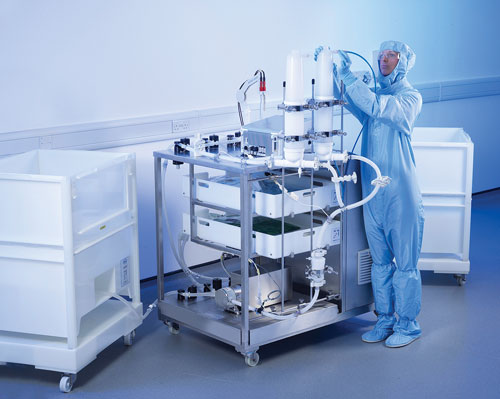
The Single-Use Bioprocessing Market refers to the global industry focused on disposable technologies and equipment used in biopharmaceutical manufacturing processes. These systems include filtration assemblies, disposable mixers, media bags and containers, and single-use bioreactors designed for one-time use instead of traditional stainless-steel infrastructure.
Single-use technologies are increasingly adopted across upstream, downstream, and fermentation workflows because they reduce contamination risks, eliminate cleaning validation requirements, and enhance manufacturing flexibility. As biologics production expands worldwide, the importance of the Single-Use Bioprocessing Market continues to grow rapidly.
According to industry analysis, the global Single-Use Bioprocessing Market is projected to reach approximately USD 116.3 billion by 2032, expanding at a CAGR of 16.2% between 2023 and 2032.
The market plays a critical role in supporting production of vaccines, monoclonal antibodies, and advanced therapies such as cell-based treatments. By enabling faster and more flexible manufacturing environments, single-use systems help pharmaceutical companies accelerate product development timelines while improving operational efficiency.
Single-Use Bioprocessing Market Trends
The Single-Use Bioprocessing Market is evolving rapidly due to technological innovation and increasing demand for flexible biologics manufacturing infrastructure. Several important trends are shaping the industry’s direction.
Rising Demand for Biopharmaceutical Production
Growing global demand for biologics—including vaccines, monoclonal antibodies, and cell-based therapies—is one of the most significant trends influencing the Single-Use Bioprocessing Market. Manufacturers increasingly rely on disposable processing solutions to meet production scalability requirements efficiently.
Integration of Automation and Digitalization
Automation and digital technologies are transforming the Single-Use Bioprocessing Market by improving process monitoring, reducing manual intervention, and enhancing manufacturing accuracy. Digital integration also supports predictive maintenance and real-time analytics, enabling better quality control.
Shift Toward Flexible Manufacturing Platforms
Biopharmaceutical companies are transitioning from rigid stainless-steel facilities to modular and flexible production systems. Disposable components support faster product changeovers and shorter facility setup times, making them ideal for multi-product manufacturing environments.
Expansion in Academic and Clinical Research Applications
Research institutes and clinical laboratories increasingly utilize single-use equipment due to its convenience, lower maintenance requirements, and reduced contamination risks. This trend continues to strengthen adoption across early-stage biologics development pipelines.
Growth in Emerging Biotech Markets
Emerging economies across Asia-Pacific are witnessing rapid expansion in biologics manufacturing infrastructure. This regional growth is contributing significantly to the expansion of the global Single-Use Bioprocessing Market.
Get a Free Sample: https://www.acumenresearchandconsulting.com/request-sample/3295
Single-Use Bioprocessing Market Dynamics
The Single-Use Bioprocessing Market is shaped by multiple growth drivers, restraints, opportunities, and industry challenges that collectively determine its development trajectory.
Market Drivers
One of the strongest drivers supporting the Single-Use Bioprocessing Market is the rising demand for biologics production worldwide. Increasing adoption of monoclonal antibodies, vaccines, and cell-based therapies is encouraging manufacturers to shift toward disposable processing solutions.
Additionally, single-use technologies reduce the risk of cross-contamination while eliminating cleaning and sterilization requirements associated with conventional stainless-steel systems. These operational advantages significantly improve manufacturing efficiency.
Another important driver is the growing need to accelerate production timelines. Single-use systems help companies respond faster to market demand while supporting flexible manufacturing strategies.
Market Restraints
Despite strong adoption rates, the Single-Use Bioprocessing Market faces certain limitations. Concerns related to scalability for large-volume manufacturing processes remain a challenge compared with traditional reusable infrastructure.
In addition, regulatory validation requirements for disposable materials can increase compliance complexity in some production environments.
Market Opportunities
The increasing adoption of advanced therapy medicinal products such as gene therapy and personalized medicine presents major opportunities for the Single-Use Bioprocessing Market.
Disposable technologies enable smaller batch production volumes and rapid process adjustments, making them ideal for personalized therapeutic manufacturing.
Growing investments in biotechnology infrastructure across developing economies are also expected to create long-term growth opportunities for market participants.
Market Challenges
One of the key challenges affecting the Single-Use Bioprocessing Market is material compatibility and waste management concerns associated with disposable plastics. Manufacturers must balance operational efficiency with sustainability considerations.
Supply chain dependency on specialized polymer components may also influence procurement timelines and production continuity in certain regions.
Regional Analysis of the Single-Use Bioprocessing Market
The Single-Use Bioprocessing Market demonstrates strong global expansion, with notable regional variations driven by infrastructure maturity, research investment, and biologics production capabilities.
North America
North America represents a leading region in the Single-Use Bioprocessing Market, supported by advanced biopharmaceutical manufacturing infrastructure and strong investment in research and development. The presence of major biotechnology companies further strengthens regional market dominance.
Additionally, widespread adoption of innovative manufacturing technologies contributes to sustained regional growth.
Europe
Europe continues to play an important role in the Single-Use Bioprocessing Market due to strong regulatory frameworks and increasing biosimilar production activities. Government support for life sciences innovation is encouraging further adoption of disposable processing technologies.
Growing interest in personalized medicine and advanced biologics manufacturing is also supporting regional expansion.
Asia-Pacific
Asia-Pacific is emerging as one of the fastest-growing regions in the Single-Use Bioprocessing Market. Rapid expansion of pharmaceutical manufacturing capacity and increasing biotechnology investments are key factors driving regional growth.
Countries such as China, India, and South Korea are strengthening their biologics production capabilities, creating significant opportunities for disposable bioprocessing technology providers.
Latin America and Middle East & Africa
These regions are gradually adopting advanced biologics manufacturing technologies. Expanding healthcare infrastructure and growing pharmaceutical investments are expected to support future growth in the Single-Use Bioprocessing Market across these emerging markets.
Recent Developments in the Single-Use Bioprocessing Market
The Single-Use Bioprocessing Market has witnessed several strategic developments in recent years that continue to shape competitive positioning and technological progress.
Integration of Digital Manufacturing Technologies
Manufacturers are increasingly integrating automation and digital monitoring systems with disposable processing equipment to improve production efficiency and scalability. These innovations are strengthening process optimization across biologics manufacturing environments.
Expansion of Product Portfolios
Industry players are expanding their offerings to include advanced disposable mixers, filtration assemblies, and bioreactor technologies. These product innovations are enabling broader adoption across upstream and downstream workflows.
Strategic Investments in Biopharmaceutical Infrastructure
Companies are increasing investments in flexible biologics manufacturing facilities to support faster therapeutic production timelines. This trend is accelerating adoption of disposable technologies across research and commercial production settings.
Increased Adoption in Clinical Research Institutes
Clinical and academic research institutions are increasingly implementing single-use systems due to reduced contamination risks and improved operational efficiency. This shift is supporting early-stage biologics development globally.
Conclusion
The Single-Use Bioprocessing Market is experiencing strong global growth driven by rising biologics demand, rapid expansion of biotechnology infrastructure, and increasing adoption of flexible manufacturing technologies. Disposable processing systems continue to transform pharmaceutical production by improving efficiency, reducing contamination risks, and supporting scalable therapeutic development.
With expanding applications across vaccines, monoclonal antibodies, and personalized medicine, the Single-Use Bioprocessing Market is expected to remain a critical component of next-generation biomanufacturing strategies worldwide.
To Get Detailed Overview, Contact Us: https://www.acumenresearchandconsulting.com/contact-us