Microbiome Skincare Products Market Size
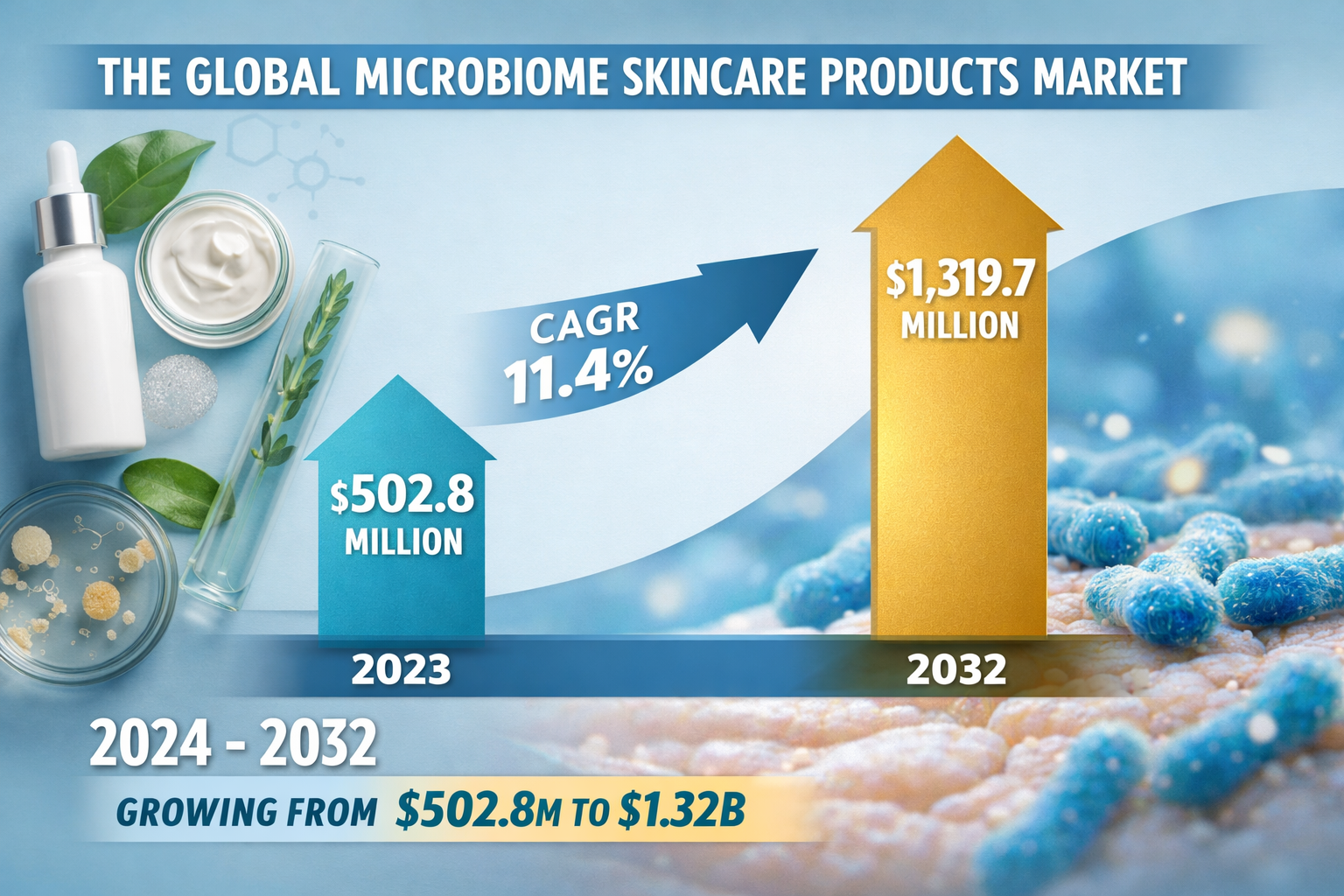
The global microbiome skincare products market was valued at USD 502.8 million in 2023 and is expected to grow to USD 1,319.7 million by 2032, achieving a robust compound annual growth rate (CAGR) of 11.4% over the forecast period.
What is the Microbiome Skincare Products Market?
The Microbiome Skincare Products Market comprises skincare formulations engineered to support, maintain, and balance the skin’s natural microbiome — the ecosystem of beneficial bacteria, fungi, and microorganisms that play a crucial role in overall skin health. These products often include probiotics, prebiotics, and postbiotics, which nourish the skin’s microbial environment, strengthen the skin barrier, and help reduce irritation, inflammation, or sensitivity.
The objective of microbiome skincare is not merely cosmetic enhancement but holistic skin wellness, targeting conditions such as acne, eczema, sensitivity, dryness, and signs of aging — all through microbiome-friendly science and formulations.
Market Trends
The microbiome skincare segment is shaped by several evolving trends that reflect both technological innovation and shifting consumer preferences:
1. Rise of Clean and Natural Beauty
Consumers are increasingly seeking formulations free of harsh chemicals, parabens, sulfates, and synthetic fragrances. This clean beauty movement aligns well with microbiome products, which emphasize natural, skin‑friendly components.
2. Probiotic‑Driven Innovations
Products incorporating probiotics, prebiotics, or postbiotics are gaining momentum as consumers and dermatologists recognize their role in promoting a balanced skin ecosystem.
3. Sensitive‑Skin and Specialized Formulations
New product launches increasingly target sensitive skin types and specific conditions (e.g., anti‑aging, acne). This diversification allows brands to address niche skincare needs with microbiome‑focused solutions.
4. E‑commerce and Digital Marketing
Direct‑to‑consumer sales and online retail channels are becoming vital, aided by social media marketing, influencer collaborations, and digital reviews — boosting market visibility and accessibility.
Market Dynamics
Key Drivers
Enhanced Awareness of Skin Health: Consumers are learning about the impact of microbiome balance on skin conditions and overall complexion.
Demand for Natural and Safe Solutions: Traditional, harsh skincare ingredients are losing appeal, while microbiome‑friendly products gain traction.
Prevalence of Skin Disorders: Rising cases of acne, eczema, and sensitivities are fueling demand for products that restore natural balance rather than suppress symptoms.
Restraints
High Production Costs: Developing microbiome‑based skincare formulations requires specialized research, increasing production expenses.
Limited Consumer Understanding: Many buyers still lack awareness of what microbiome science entails, slowing adoption.
Regulatory Complexity: Lack of standardized regulations around microbiome skincare formulations poses challenges for product approvals.
Opportunities
New Product Lines: Expansion into niche segments, such as targeted acne solutions or anti‑aging microbiome serums, presents growth potential.
Biotechnology Innovations: Continued advances in probiotic and postbiotic ingredient technologies will enhance product efficacy and differentiation.
E‑commerce Growth: Increasing online sales and digital engagement present opportunities for market expansion.
Regional Analysis
Market performance varies significantly across global regions, with each region presenting unique dynamics:
North America
North America currently dominates the global microbiome skincare market, driven by high consumer awareness, strong disposable incomes, and a mature cosmetics industry that embraces science‑backed skincare solutions. The United States and Canada are central markets where microbiome products are increasingly integrated into daily routines.
Asia‑Pacific
The fastest‑growing region, Asia‑Pacific, benefits from rising skincare awareness in countries like China, Japan, South Korea, and India. Cultural emphasis on skincare, coupled with rapid e‑commerce adoption, is propelling demand for microbiome products across various demographics.
Europe
Europe holds a significant market share due to strong consumer preference for sustainable and scientifically validated formulations. Countries like France, Germany, and the UK are pivotal contributors.
Latin America & Middle East & Africa
While smaller in overall size, emerging markets in Latin America and the Middle East & Africa are showing increased interest, particularly among younger consumers influenced by global beauty trends.
Recent Developments
The microbiome skincare sector has witnessed notable activity in new product launches, collaborations, and scientific innovation. Key brands like Amyris, Elizabeth Arden, Murad LLC, Missha, BioGaia, Aveeno (J&JCI), Glowbiotics LLC, GALLINÉE, L’Oréal Paris, Eminence Organic Skin Care, and Amorepacific are active players shaping the market landscape.
Brands are increasingly investing in:
New probiotic and postbiotic formulations
Partnerships with biotechnology firms
E‑commerce driven marketing strategies
Targeted product lines for sensitive or condition‑specific skin concerns
Conclusion
The Microbiome Skincare Products Market represents a transformative shift in skincare philosophy — one that prioritizes the science of microbial balance and skin health over purely aesthetic outcomes. With strong projected growth, innovative trends, and expanding global demand, this segment is poised to become a cornerstone of future skincare strategies.
To Get Detailed Overview, Contact Us: https://www.acumenresearchandconsulting.com/contact-us