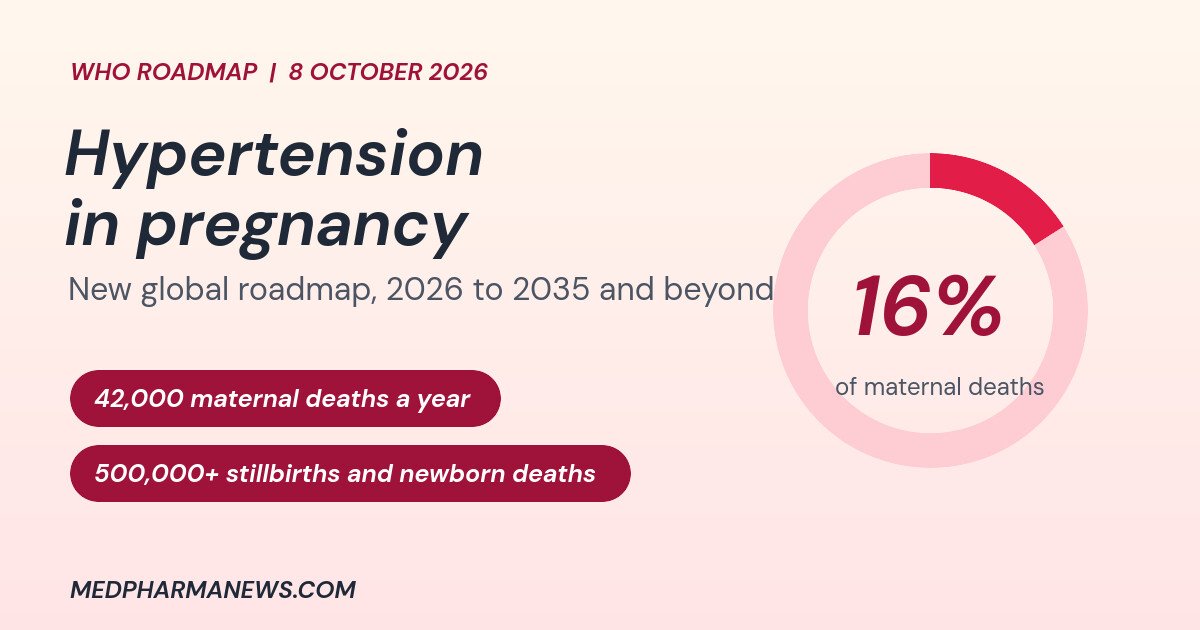
Hypertension in pregnancy now has a global plan. On 8 October 2026 the World Health Organization (WHO) and partners launched a roadmap on hypertensive disorders of pregnancy, including pre-eclampsia, at the Society for Maternal-Fetal Medicine Global Conference. The roadmap runs from 2026 to 2035 and beyond, and it sets out coordinated action on research, clinical guidance, access to medicines and diagnostics, implementation, advocacy and accountability.
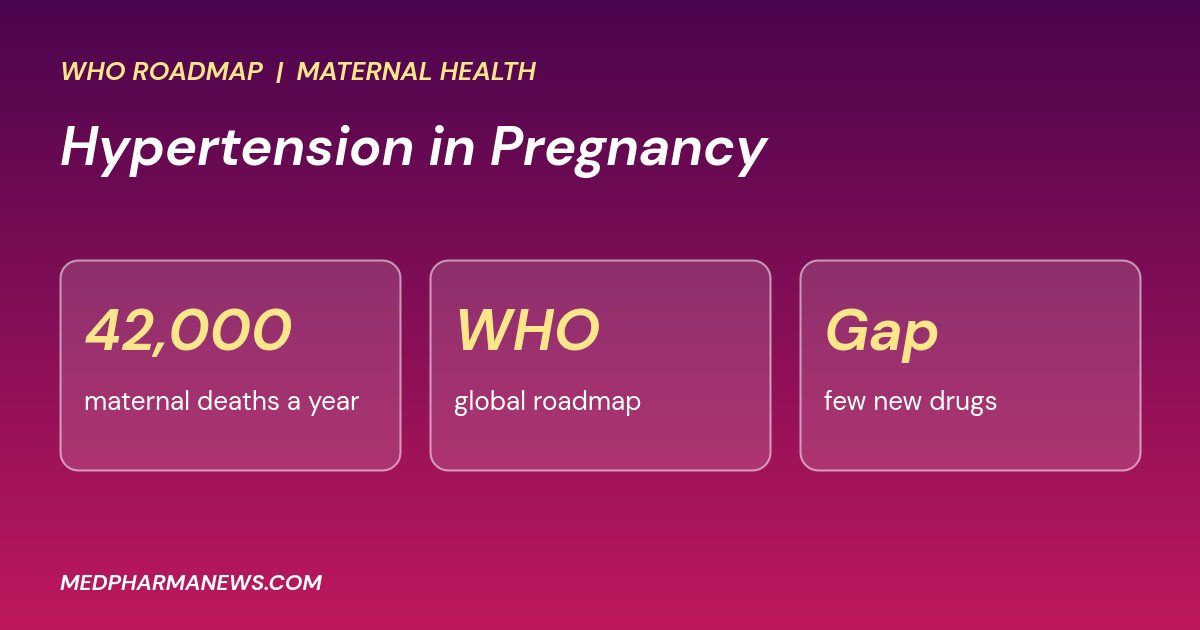
The reason is scale. WHO says these disorders affect an estimated 10% to 15% of pregnancies worldwide and cause about 16% of maternal deaths, roughly 42,000 a year, along with more than 500,000 stillbirths and newborn deaths. This report explains what the roadmap covers, why WHO highlights an innovation gap for medicines, and what we could not confirm from the announcement.
Hypertension in pregnancy at a glance
- Launched: 8 October 2026 by WHO and partners.
- Period covered: 2026 to 2035 and beyond.
- Prevalence: an estimated 10% to 15% of pregnancies.
- Maternal deaths: about 16%, roughly 42,000 each year.
- Babies: more than 500,000 stillbirths and newborn deaths each year.
- Our calculation: 42,000 deaths a year is about 115 women a day, and, if 16% is right, it implies roughly 260,000 maternal deaths in total, which is consistent with WHO’s own estimates in its WHO maternal mortality fact sheet.
Why hypertension in pregnancy persists
The core conditions, high blood pressure in pregnancy and pre-eclampsia, are well understood, and the tools to detect and manage them are not exotic. The difficulty is delivery. WHO describes several gaps that keep women from basic care:
- Many women lack reliable blood-pressure measurement and urine protein testing.
- Essential medicines are out of reach for many, including aspirin, antihypertensives and magnesium sulfate.
- Referral systems are weak, so a woman who is diagnosed may not reach a hospital in time.
- There are too few trained health workers and limited emergency obstetric services.
Those gaps explain why the burden falls so unevenly. Women in low- and middle-income countries face higher risks of severe complications and death, and the risk is higher still for women affected by poverty, humanitarian crises or geographic isolation.
What the roadmap on hypertension in pregnancy sets out
According to WHO, the roadmap organises action in six areas:
- Research and innovation: including new treatments and better ways of predicting and diagnosing disease.
- Clinical guidance: consistent recommendations for prevention, detection and treatment.
- Access to medicines and diagnostics: getting proven tools to the women who need them.
- Implementation: turning guidance into working health services.
- Advocacy: keeping the issue on political and funding agendas.
- Accountability: tracking progress against commitments.
WHO calls on governments, funders, researchers, health professionals, industry, civil society and development partners to align investment and action. Dr Pascale Allotey, who directs WHO’s department covering sexual, reproductive, maternal, child, adolescent health and ageing, said that pre-eclampsia can develop in any pregnancy, and that the aim is for a woman’s chances of surviving pregnancy and having a baby not to depend on where she lives.
Hypertension in pregnancy: the innovation gap in drugs and diagnostics
One of the most pointed findings concerns medicines. WHO says few drugs are specifically approved by regulators for preventing or treating pre-eclampsia or eclampsia, and that research has focused mainly on diagnostics. In other words, much of what is used today relies on older drugs applied to pregnancy, such as aspirin for prevention in high-risk women, blood-pressure medicines and magnesium sulfate for seizures, rather than treatments designed and tested for the condition.
A May 2026 global summit with more than 140 partners identified 20 priority research questions, which the roadmap is intended to feed into. In our assessment, this is the part most relevant to the pharmaceutical and diagnostics industry: pregnant women have historically been excluded from many trials, which makes development riskier and slower. A public roadmap that names the gaps can help developers, regulators and funders agree on priorities, but it does not by itself change the economics. That will depend on funding, trial design and regulatory incentives.
Lasting effects of hypertension in pregnancy
WHO also stresses that the harm does not end at delivery. Mothers who had these disorders face higher later-life risks of chronic hypertension, cardiovascular disease, stroke and kidney disease. Children exposed in the womb face higher risks of preterm birth and, later on, cardiovascular and metabolic disease. That long tail is part of the case for treating pregnancy as an early window for preventing chronic disease, not only as an obstetric event.
What we could not confirm
- Specific numerical targets, such as a percentage reduction in deaths by a given year.
- Funding amounts or financial commitments from governments and donors.
- Country-level commitments or timelines for rollout.
- The names of all partner organisations.
We reviewed WHO’s news release rather than the full roadmap document, which may contain more detail. Readers should consult the roadmap itself for targets and responsibilities.
Warning signs of hypertension in pregnancy: general information
Health services generally advise pregnant women to seek urgent care if they have a severe headache that does not ease, changes in vision, pain in the upper abdomen, sudden swelling of the face or hands, or reduced baby movements. Regular blood-pressure checks at antenatal visits are the main way of catching the condition early. This is general information and not medical advice; anyone who is pregnant and worried should speak to a midwife or doctor.
For related WHO coverage, see our report on WHO’s guidelines on childhood obesity, or browse more pharmaceutical news.
What to watch next on hypertension in pregnancy
- Publication of measurable targets and a monitoring framework.
- Donor and government funding announcements.
- Trials of new preventive and treatment options for pre-eclampsia.
- Progress on affordable blood-pressure devices and urine tests in primary care.
Bottom line on hypertension in pregnancy
Hypertension in pregnancy is linked to about 42,000 maternal deaths a year, according to the figure cited with the roadmap. In our assessment, the test of the roadmap is whether countries act on hypertension in pregnancy with funded screening and treatment, and not only with plans.
Frequently asked questions
What is the new WHO roadmap on hypertension in pregnancy?
A global plan launched on 8 October 2026 to coordinate research, guidance, access, implementation, advocacy and accountability on hypertensive disorders of pregnancy, including pre-eclampsia.
How common is hypertension in pregnancy?
WHO estimates that hypertensive disorders affect 10% to 15% of pregnancies worldwide.
How many deaths are linked to hypertension in pregnancy?
About 16% of maternal deaths, roughly 42,000 a year, plus more than 500,000 stillbirths and newborn deaths.
Why is there an innovation gap?
Few medicines are specifically approved for pre-eclampsia or eclampsia, and research has focused mainly on diagnostics.
Who is most at risk of hypertension in pregnancy?
Women in low- and middle-income countries, especially those affected by poverty, humanitarian crises or isolation.
How we reported this: we relied on WHO’s news release of 8 October 2026. Background on existing treatments and warning signs is general knowledge, and our calculations are labelled. Last updated: 9 October 2026. This article is news reporting and not medical advice.