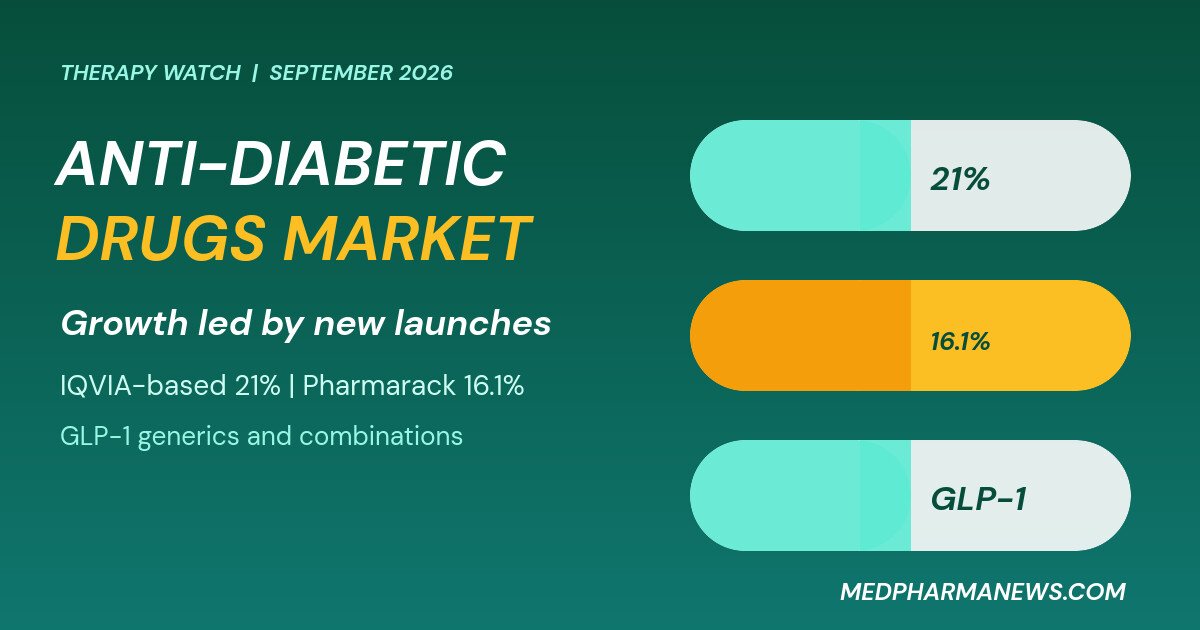
The anti-diabetic drugs market was one of the brightest spots in India’s September 2026 pharmaceutical sales. Brokerage research that uses IQVIA data puts anti-diabetic growth at about 21% year on year, within an overall market that grew 17.1% to about ₹25,276 crore.
A separate data set from Pharmarack shows a lower but still strong 16.1% value growth for anti-diabetes, and explains it differently: new generics rather than more units.
This report looks at the anti-diabetic segment and what the two readings imply for drugmakers, doctors and patients.
Anti-diabetic drugs market: key takeaways
- IQVIA-based research: anti-diabetic sales up about 21%, helped by higher sales of high-value brands.
- Pharmarack: anti-diabetes value up 16.1%, of which new products added 9.5 points, price 5.6 points and volume about 1 point.
- Pharmarack ties the new-product contribution to new generic launches in GLP-1 medicines and in oral combinations such as empagliflozin.
- The IQVIA-based research expects domestic formulations to stay strong, helped by GLP-1 opportunities.
What the two data sets say about the anti-diabetic drugs market
The two sources agree that diabetes medicines grew faster than the market average in value terms, or close to it, and disagree on the size and the cause. In the IQVIA-based research, anti-diabetic growth of about 21% sits among the top therapy groups, behind vitamins and nutritionals at about 22% and ahead of cardiac at about 20%. The research credits patient volumes and higher offtake of high-value anti-diabetic brands.
In Pharmarack’s breakdown for September, anti-diabetes value grew 16.1%. The largest part, 9.5 points, came from new products, followed by 5.6 points from price and only about 1 point from volume. That points to a segment where growth is coming from newly launched generic versions and combinations, and not from a large rise in the number of units sold.
Why GLP-1 generics matter to the anti-diabetic drugs market
Pharmarack says the anti-diabetes growth came mainly from new generic launches in GLP-1 medicines and from oral combination products such as those containing empagliflozin. GLP-1 medicines are a class used in type 2 diabetes and, in some products, for weight management.
When generic versions launch, they bring new brands into the measured market even if prices per brand are lower than the originals. That can add value in the first months simply because there are more products on the shelf.
The reports do not name the generic products or companies, so we cannot say which firms are driving the new-product contribution. Readers should treat the point as a description of the segment and not a company ranking.
The role of chronic care in the anti-diabetic drugs market
Diabetes is a lifelong condition, and treatment is repeated every month, which is why chronic therapies are an attractive base for pharma sales. In the IQVIA-based research, chronic therapies grew about 19% in September against about 16% for acute ones, and the trailing 12-month rate was 16.8% for chronic and 10.9% for acute.
Cardiac medicines, which often treat the same patients, also grew strongly: about 20% in that research, and 17.7% in Pharmarack’s data, with unit growth of 9.1%.
The research gives several reasons: better diagnosis, greater attention to preventive health, lifestyle-related disease, more medical representatives reaching smaller towns and tighter regulatory compliance. We cannot weigh these against each other from the material available.
What the anti-diabetic drugs market means for drugmakers
For manufacturers, a market where new products and combinations add most of the growth rewards companies that can launch quickly and win prescriber trust. It also invites price competition once many generics are on sale. The research mentions that tighter manufacturing rules, known as Schedule M requirements, have created gaps in the market, which could favour firms that comply.
Company-level data in the same research show a wide spread, from about 5% to about 20% growth in September, so the market lift is not reaching every firm equally.
Readers following pricing policy can see our report on the Supreme Court hearing on medicine price caps in India, and more market coverage is in industry insights.
What it means for doctors and patients
Sales figures describe what the pharmacy chain sold, not how patients fared. A growing anti-diabetic drugs market can mean that more people are being diagnosed and treated, which is good news if it reflects better care. It can also reflect a shift to newer, costlier brands, which may matter to patients paying out of pocket.
The reports do not separate the two, and they say nothing about prices paid by patients or about treatment outcomes. People managing diabetes should follow their doctor’s advice on which medicine to take and should not change treatment because of market news.
Risks and caveats on the anti-diabetic drugs market
- The 21% figure and the 16.1% figure come from different providers and should not be mixed.
- A strong month does not show a lasting trend; new-generic effects can fade after launch.
- Neither data set tells us how many patients are actually taking more medicine.
- The reports do not name the products or companies behind the growth.
In our assessment, the anti-diabetic drugs market is growing for a mixed set of reasons, and the Pharmarack breakdown suggests it is driven more by new launches than by a surge in units. If so, growth could slow as the novelty of new launches fades, unless volumes pick up.
What to watch next in the anti-diabetic drugs market
- October and November data on anti-diabetic sales from both providers.
- Whether volume growth in diabetes rises above about 1%.
- Launches and price moves in GLP-1 generics.
- Any rule changes from CDSCO or the Department of Pharmaceuticals that affect manufacturing or pricing.
Frequently asked questions
How fast is the anti-diabetic drugs market growing in India?
About 21% in September 2026 per IQVIA-based research, and about 16.1% in value per Pharmarack.
What is driving growth in anti-diabetic drugs?
Higher sales of high-value brands per one source, and new generic launches in GLP-1 medicines and oral combinations per the other.
Is growth coming from more patients?
Pharmarack shows only about 1% unit growth in diabetes in September, so most of the value growth is not from volume.
How big is the whole market?
About ₹25,276 crore in September 2026, up 17.1%, per IQVIA-based research.
How we reported this: we relied on brokerage research using IQVIA data and a Pharmarack data release, both as reported, and the websites of the bodies named. Figures labelled as ours are our own calculations. Last updated: 15 October 2026. This article is news reporting and not medical or investment advice.