Pruritus Therapeutics Market Size
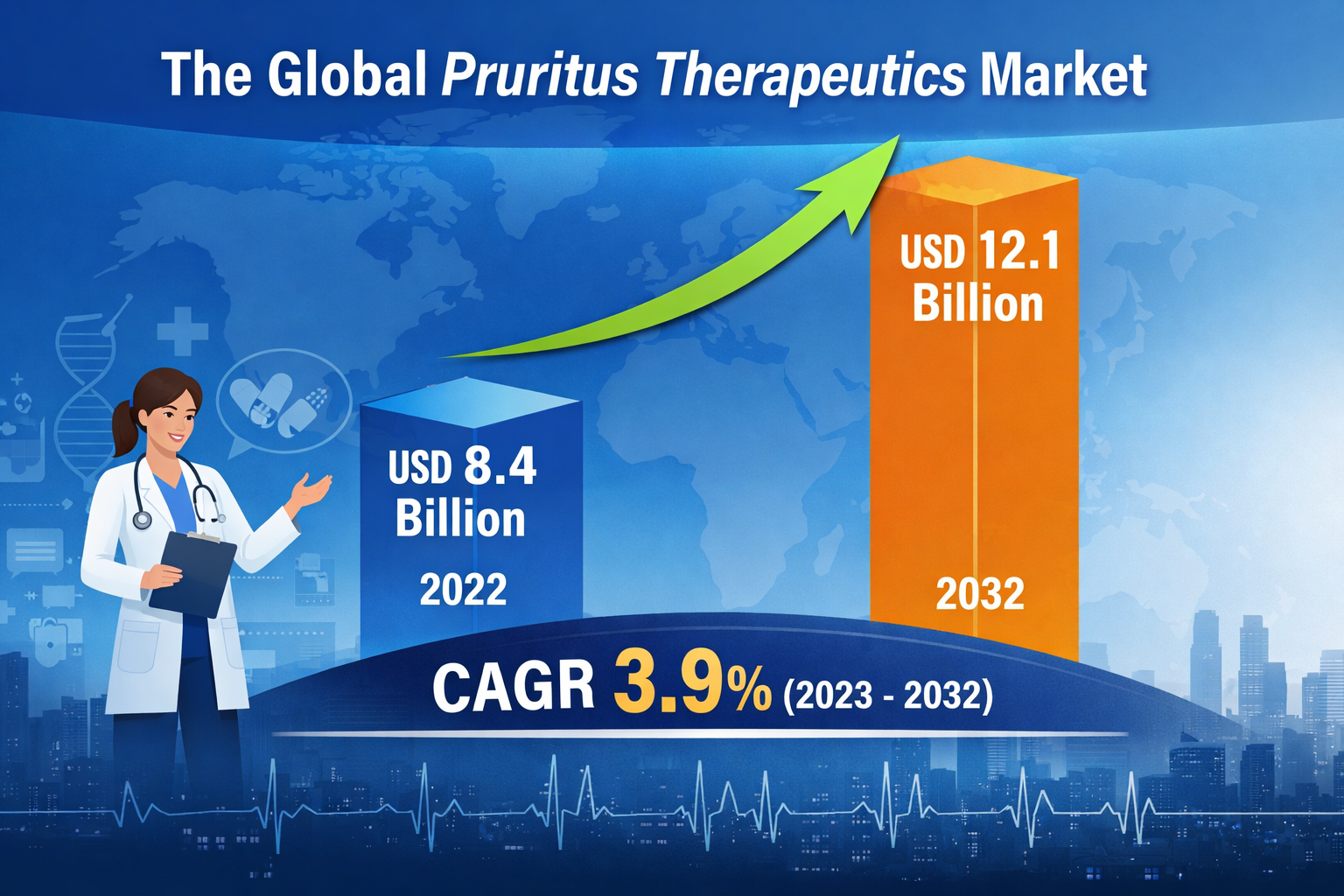
The global pruritus therapeutics market was valued at approximatelyUSD 8.4 Billion in 2022 and is expected to reach aroundUSD 12.1 Billion by 2032, growing at a CAGR of about3.9% during the forecast period.
What Is the Pruritus Therapeutics Market?
The Pruritus Therapeutics Market refers to the global industry focused on developing, producing, and distributing therapies intended to treat pruritus — a distressing symptom associated with various skin conditions, systemic diseases, and immune disorders. Therapeutics in this market include topical agents, oral drugs, corticosteroids, antihistamines, immunosuppressants, and other products that help reduce itching and inflammation.
This market is vital because itching, whether mild or chronic, impacts patient wellbeing, sleep quality, productivity, and overall health outcomes. As the number of dermatological and systemic conditions associated with itch rise — such as atopic dermatitis, psoriasis, and chronic kidney disease — demand for these therapeutic solutions has grown significantly.
Market Trends Shaping Growth
1. Increasing Innovation & Advanced Therapies
The market is transitioning from basic over‑the‑counter itch remedies to more targeted therapeutic solutions, with pharmaceutical research focusing on novel biologics and molecular-based medications. Newer therapies aim to address the underlying causes rather than simply relieving symptoms.
2. Personalized Treatment Approaches
Healthcare providers and researchers are placing strong emphasis on tailored pruritus management, recognizing that individual patient profiles — including genetics and disease mechanisms — influence treatment response.
3. Telehealth & Digital Integration
Digital health technologies and remote patient monitoring are increasingly used to improve treatment adherence and enhance patient experience — especially in dermatological care.
4. Higher Awareness & Patient Advocacy
Greater awareness about the impact of itching on quality of life has led to proactive diagnosis and treatment, boosting both demand and market growth.
Market Dynamics: Growth Drivers, Restraints & Opportunities
Key Drivers
Rising prevalence of chronic skin disorders: Conditions like atopic dermatitis and psoriasis are increasing worldwide, driving the need for effective itch relief.
Pharmaceutical R&D advancements: Companies are increasingly investing in innovative therapeutics beyond traditional creams and anti‑itch medicines.
Aging global population: Older individuals are more prone to pruritic conditions, expanding the target patient population.
Increased healthcare spending and insurance coverage: More patients can access advanced treatments.
Market Restraints
Regulatory approval challenges: Rigorous safety and clinical efficacy standards can delay time-to-market for new therapies.
Side effect concerns: Some treatments pose risks or adverse reactions, limiting broader adoption.
Opportunities
Digital & personalized pruritus care models: Leveraging data and patient-specific diagnostics for tailored treatment.
Emerging therapeutic classes: Novel agents like targeted biologics and next-generation itch modulators present high growth potential.
Regional Analysis: How the Market Is Performing Globally
The Pruritus Therapeutics Market demonstrates diverse regional performance, each shaped by healthcare infrastructure, disease prevalence, and demographic trends.
North America
North America holds a leading market share, accounting for more than 40% of global revenue — supported by advanced healthcare systems, high dermatology treatment uptake, strong research activity, and pharmaceutical innovation.
Asia‑Pacific
The Asia‑Pacific region is emerging as a rapidly growing market. Factors such as rising dermatological disease rates, urbanization, improving healthcare access, and an expanding patient base contribute to its high growth trajectory.
Europe
Europe remains a key market, with strong adoption of advanced therapeutics and growing awareness about chronic itch conditions.
Latin America & Middle East/Africa
These regions show moderate growth, driven by improving healthcare systems, growing awareness, and rising demand for better skin health management, though limited access to high-end therapies slows expansion relative to developed regions.
Recent Developments Impacting the Market
Global industry developments illustrate a dynamic market environment:
FDA approvals of new pruritus-targeted drugs (such as opioid receptor modulators) are expanding treatment options, particularly for chronic itch conditions.
Increased R&D investments and emerging strategic collaborations among pharmaceutical companies enhance innovation pipelines.
Adoption of digital health tools is increasing, empowering patients and clinicians in efficient disease management.
These developments collectively accelerate market transformation, adding depth and competitiveness to the pruritus therapeutics landscape.
Conclusion
The Pruritus Therapeutics Market stands at the intersection of rising dermatological challenges and innovative healthcare solutions. Fueled by growing demand, robust R&D activity, and regional diversification, this market is on track to expand significantly over the coming decade. As therapies become more targeted and patient-centric, the industry’s ability to address itching — a symptom long neglected in mainstream medicine — continues to strengthen, offering improved outcomes for millions worldwide.
To Get Detailed Overview, Contact Us: https://www.acumenresearchandconsulting.com/contact-us